


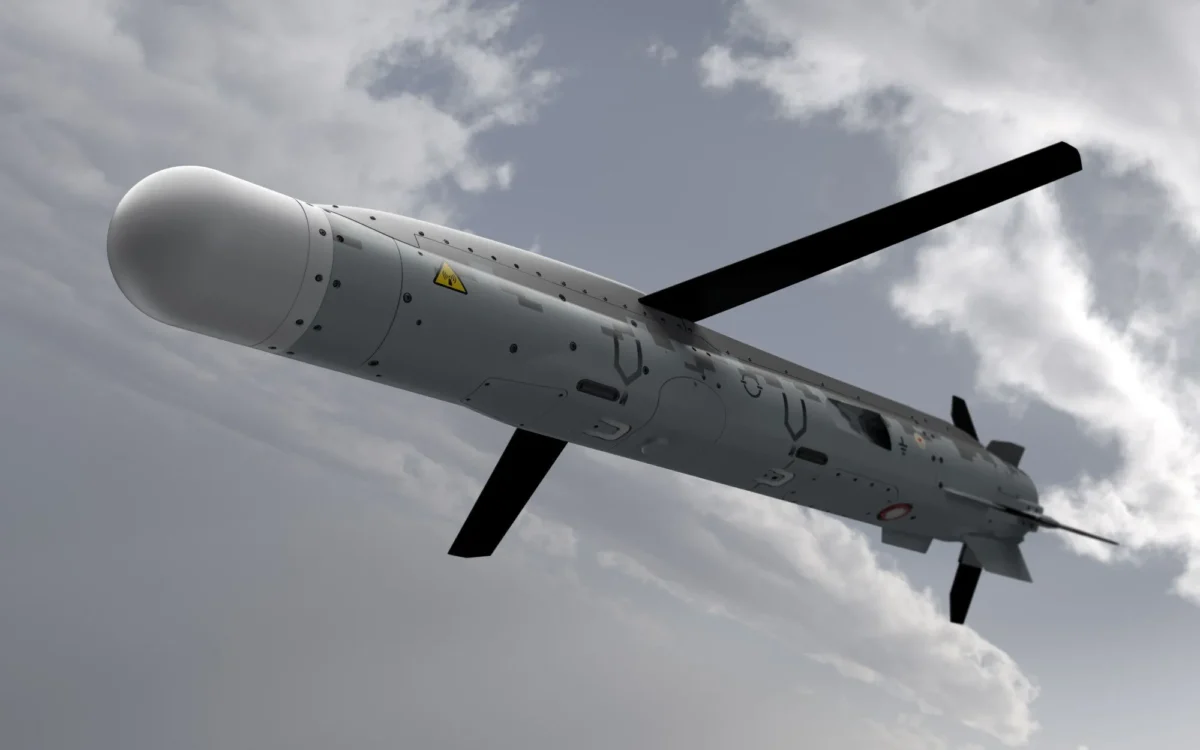
MBDA Briefs Hellenic Air Force on SPEAR and SPEAR-EW Capabilities
The Hellenic Air Force General Staff hosted representatives of MBDA UK on 8 October 2026 for a presentation on the capabilities of the company’s SPEAR and SPEAR-EW weapon systems, according to an announcement published by the Greek Ministry of National Defence on 14 October. The meeting provided an opportunity for Greek officials to receive information on two complementary capabilities combining precision strike and electronic warfare. Although the announcement did not disclose procurement intentions, operational requirements or potential integration platforms, the briefing addressed technologies relevant to air operations against sophisticated air defence networks. The pairing of a miniature cruise missile with an electronic warfare variant illustrates an approach in which physical attack, radar disruption and deception can contribute to the effectiveness and protection of an attacking force.
SPEAR-EW is being developed as a stand-in electronic warfare effector intended to confuse and suppress hostile air defences, helping protect friendly forces operating in contested airspace. In September 2023, MBDA announced additional funding from the UK Ministry of Defence to accelerate development through a Rapid Design Phase. The funding was intended to mature the system’s key subsystems and support mission and planning evaluation. That announcement provides background to the programme rather than confirmation of its current operational readiness. The concept addresses a significant challenge for modern air forces: conducting missions against interconnected radar and surface-to-air missile systems that can constrain access to defended areas. By placing an electronic warfare payload closer to hostile sensors, SPEAR-EW is intended to support operations through disruption and deception, complementing the effects delivered by conventional weapons.
The electronic warfare payload is being developed by Leonardo using its Digital Radio Frequency Memory technology. According to the companies’ description, the payload will provide sensing and electronic attack capabilities, allowing operators to jam enemy radar systems and generate deceptive effects, including false targets. These effects are intended to divert the attention of threat systems away from crewed aircraft or other effectors. Leonardo has linked the development to its experience with onboard electronic warfare equipment for the Eurofighter Typhoon and offboard jamming through the BriteCloud expendable active decoy. The operational significance lies in the ability to complicate an adversary’s interpretation of the air picture. Electronic deception can create uncertainty over which radar returns represent genuine threats, potentially affecting the defender’s ability to prioritise targets and allocate defensive resources effectively.
SPEAR-EW uses the same airframe as MBDA’s SPEAR miniature cruise missile, providing a common foundation for the strike and electronic warfare variants. MBDA has stated that this commonality reduces development costs and supports a shared integration and launcher solution, while lowering the logistics burden and offering the potential to carry multiple weapons. For the Hellenic Air Force, the October presentation represents a documented exchange of information on these capabilities, rather than an announced acquisition decision. Its broader relevance concerns how precision weapons and expendable electronic warfare systems could operate together within future air campaigns. Any assessment of their suitability for Greek requirements would also need to consider platform compatibility, integration arrangements, programme maturity and the operational priorities of the service.
 Greek
 English