


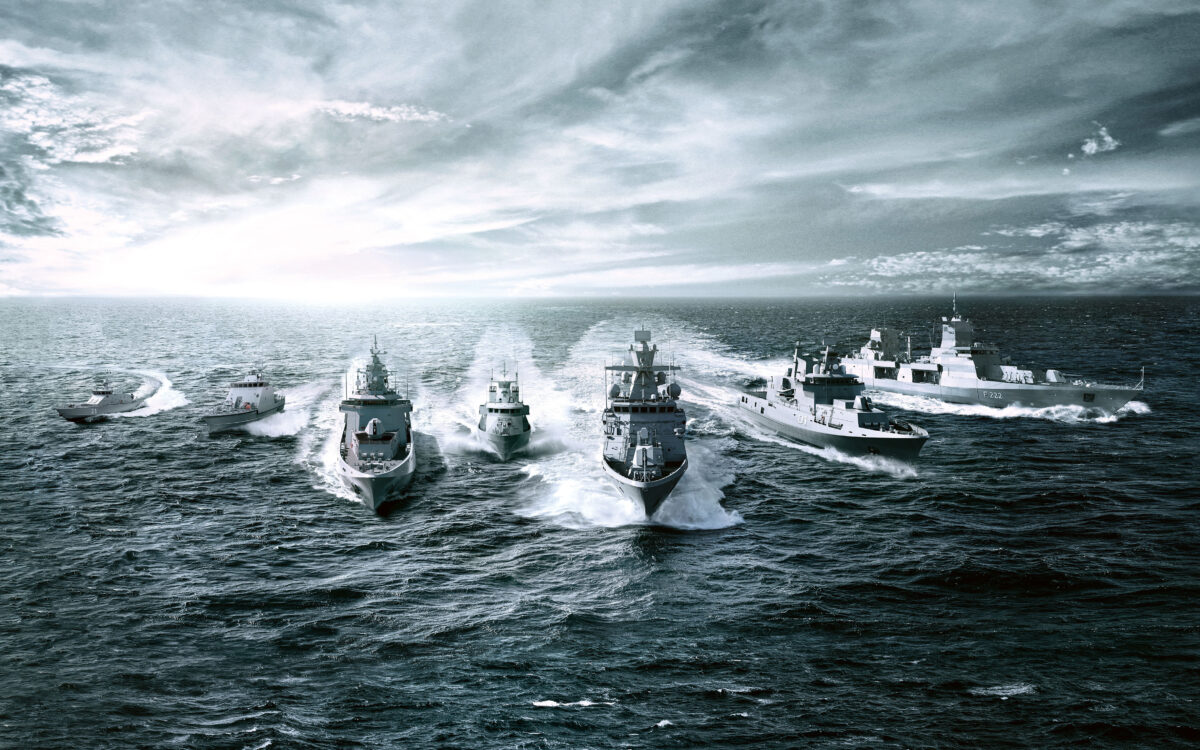
Rheinmetall Acquires NVL to Build a German Naval Powerhouse
Rheinmetall AG has completed its takeover of Naval Vessels Lürssen (NVL), marking a decisive expansion of the Düsseldorf-based defence group into full-scale naval shipbuilding. The acquisition, finalised on 1 March 2026 following regulatory approval, brings the military division of the historic Lürssen shipyard group under Rheinmetall’s control. While the purchase price remains undisclosed, the strategic implications are clear: Germany is set to gain a powerful new cross-domain defence systems house with a strong maritime backbone.
For decades, Rheinmetall has been best known for its land systems, ammunition, air defence solutions and military electronics. Although it has supplied naval guns, protection systems and simulation technologies to fleets worldwide, it did not previously operate its own large-scale shipbuilding capability. NVL changes that equation entirely. Headquartered in Bremen-Vegesack, NVL operates four shipyards across northern Germany, including Peene-Werft in Wolgast, Blohm+Voss and Norderwerft in Hamburg, and Neue Jadewerft in Wilhelmshaven. With approximately 2,100 employees and annual sales of around €1 billion in 2024, the company has delivered roughly 1,000 vessels to more than fifty navies and coast guards over its 150-year history.
The integration of NVL positions Rheinmetall to evolve from a component supplier into a prime contractor capable of delivering complete naval platforms. This shift reflects a broader trend in the European defence industry toward consolidation and system integration. Rather than offering standalone weapons, sensors or electronic subsystems, leading defence firms are increasingly expected to provide fully integrated, digitally networked solutions. Rheinmetall’s leadership has repeatedly emphasised its ambition to become a “cross-domain system house,” active on land, at sea, in the air and in space.
The timing is significant. Rising geopolitical tensions and increased defence spending across Europe have triggered renewed demand for naval capabilities, including frigates, corvettes, support vessels and autonomous maritime systems. NVL is widely regarded as a pioneer in autonomous surface vessel research and development, a field that is rapidly gaining importance as navies seek to expand operational reach while managing personnel constraints and costs.
From an industrial standpoint, the acquisition strengthens Germany’s domestic defence manufacturing base. By combining Rheinmetall’s expertise in weapons systems, sensors, effectors and combat support technologies with NVL’s shipbuilding infrastructure, the group aims to deliver integrated vessels from a single source. Rheinmetall has indicated that future naval programmes could incorporate naval missiles, launchers, main and secondary guns, air and missile defence systems, and advanced electronics into unified platform solutions.
There are also potential cross-sector synergies. Rheinmetall’s Vehicle Systems division already operates facilities in northern Germany, including sites in Kiel and Flensburg. NVL’s heavy industrial infrastructure and skilled workforce could provide additional production flexibility and capacity, particularly as defence orders increase across multiple domains.
Beyond the industrial logic, the move carries strategic weight. European governments are seeking greater sovereignty in defence procurement and reduced reliance on non-European suppliers. By absorbing NVL, Rheinmetall contributes to the consolidation of the European defence industry while reinforcing Germany’s role as a central pillar in NATO’s maritime capability framework.
Ultimately, the acquisition signals Rheinmetall’s transformation into a diversified defence prime with ambitions that extend far beyond its traditional land systems roots. With NVL now part of the group, the company is positioning itself as a comprehensive maritime systems integrator at a time when naval power is once again a central element of European security policy.
 English
  Greek
Greek