


Greece and Israel Sign €3 Billion Achilles’ Shield Air Defense Agreement
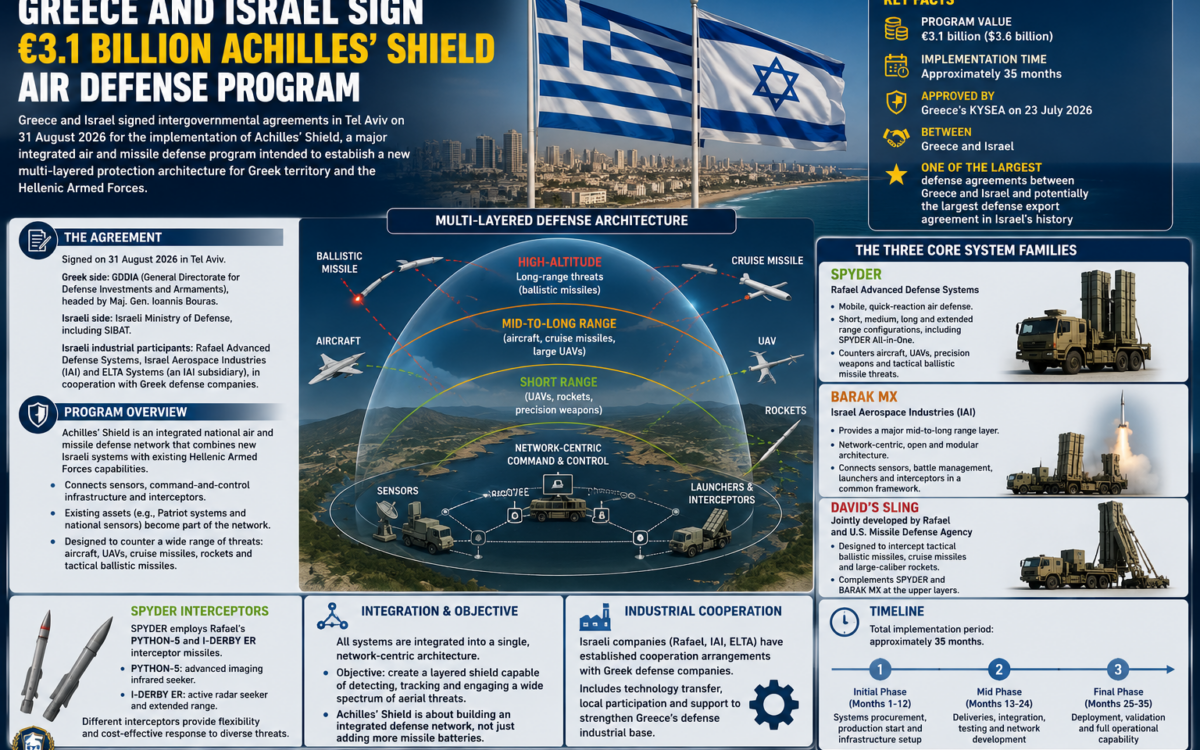
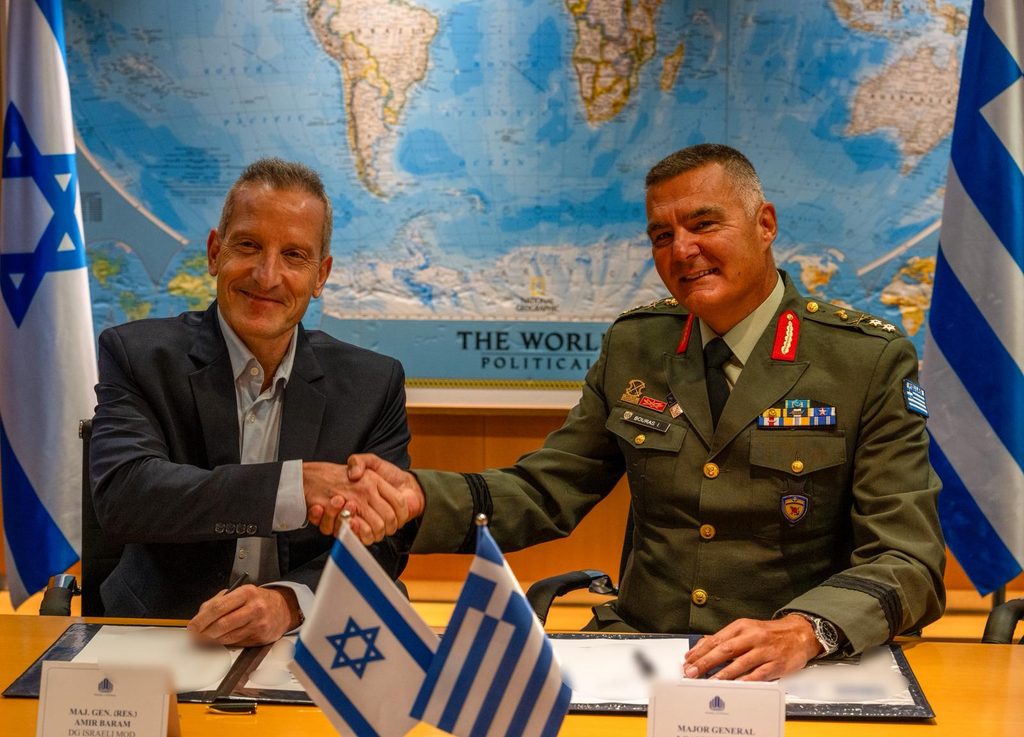
Greece and Israel signed an approximately €3 billion intergovernmental defense agreement on 31 August 2026 for the implementation of Achilles’ Shield, a comprehensive multi-layered air and missile defense architecture that will combine several Israeli-made systems within a new national air defense network for Greece.
The agreement was signed at the headquarters of the Israel Ministry of Defense (IMOD) by Director General of the Ministry, Maj. Gen. (Res.) Amir Baram, and his Greek counterpart, Ioannis Bouras, head of Greece’s General Directorate for Defense Investments and Armaments (GDDIA). The signing follows approximately three years of negotiations and represents one of the largest individual elements of Greece’s ongoing defense modernization program.
According to the Israeli Ministry of Defense, the agreement is the largest defense export deal in the history of Israel-Greece relations and one of the largest defense export agreements concluded by Israel. For Greece, Achilles’ Shield represents one of the country’s most significant defense procurement programs and a central component of the wider modernization of the Hellenic Armed Forces.
The program had previously received approval from Greece’s Government Council for Foreign Affairs and Defense (KYSEA) on 23 July 2026. Implementation is expected to take approximately 35 months, with individual systems and capabilities entering service progressively.
A Multi-Layered National Air Defense Architecture
Achilles’ Shield is intended to establish an integrated national air and missile defense network rather than simply introduce additional missile batteries into the existing Greek inventory.
The architecture is designed to provide protection against a wide spectrum of threats, ranging from conventional aircraft and unmanned aerial vehicles to cruise missiles, heavy rockets and ballistic missiles. Sensors, command-and-control infrastructure and different types of interceptors will operate as elements of a common defensive network.
The final agreement confirms that the core architecture will include David’s Sling and SPYDER, manufactured by Rafael Advanced Defense Systems; the BARAK MX air and missile defense system manufactured by Israel Aerospace Industries (IAI); MMR multi-mission radars manufactured by ELTA Systems, an IAI subsidiary; and a new national command-and-control system to be developed by Rafael.
Existing Greek air defense capabilities and national sensors are expected to be progressively connected to the broader architecture, allowing the Hellenic Armed Forces to coordinate different sensors and effectors through a more unified command structure.
The program consequently addresses two requirements simultaneously: the acquisition of modern interception capabilities and the restructuring of Greece’s ground-based air defense around a network-centric architecture.
David’s Sling: The Upper Defensive Layer
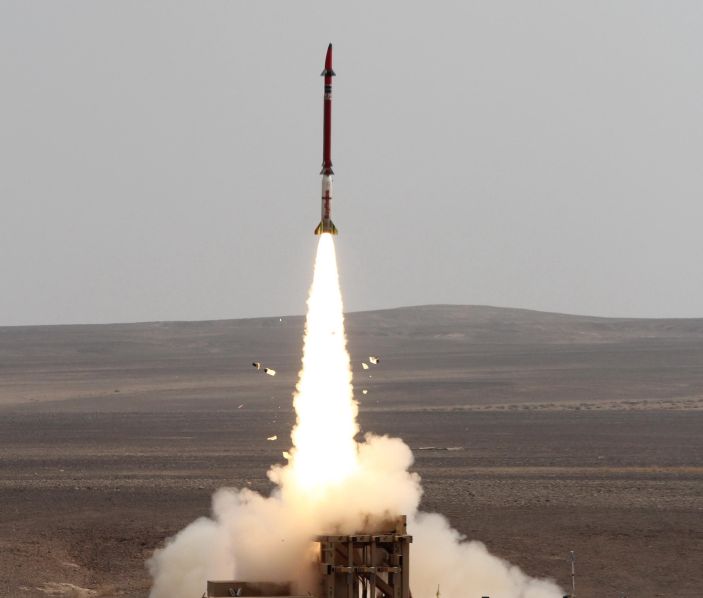
At the upper end of the architecture will be David’s Sling, developed by the Israeli Missile Defense Organization within the Ministry of Defense’s Directorate of Defense Research and Development (DDR&D), with Rafael serving as prime developer.
David’s Sling is designed to counter demanding aerial and missile threats, including tactical ballistic missiles, large-caliber rockets and other advanced threats, and already forms an operational component of Israel’s multi-layered missile defense architecture.
Greece will become the second European country to acquire David’s Sling, according to Rafael.
At the core of the system is the Stunner interceptor, also marketed internationally in a related configuration as SkyCeptor. The interceptor incorporates advanced guidance, propulsion and seeker technologies designed for engagements against complex missile threats.
The introduction of David’s Sling will provide Greece with a new defensive layer above conventional short- and medium-range ground-based air defense capabilities and strengthen its capacity to address increasingly sophisticated missile threats.
SPYDER for Mobile Air Defense
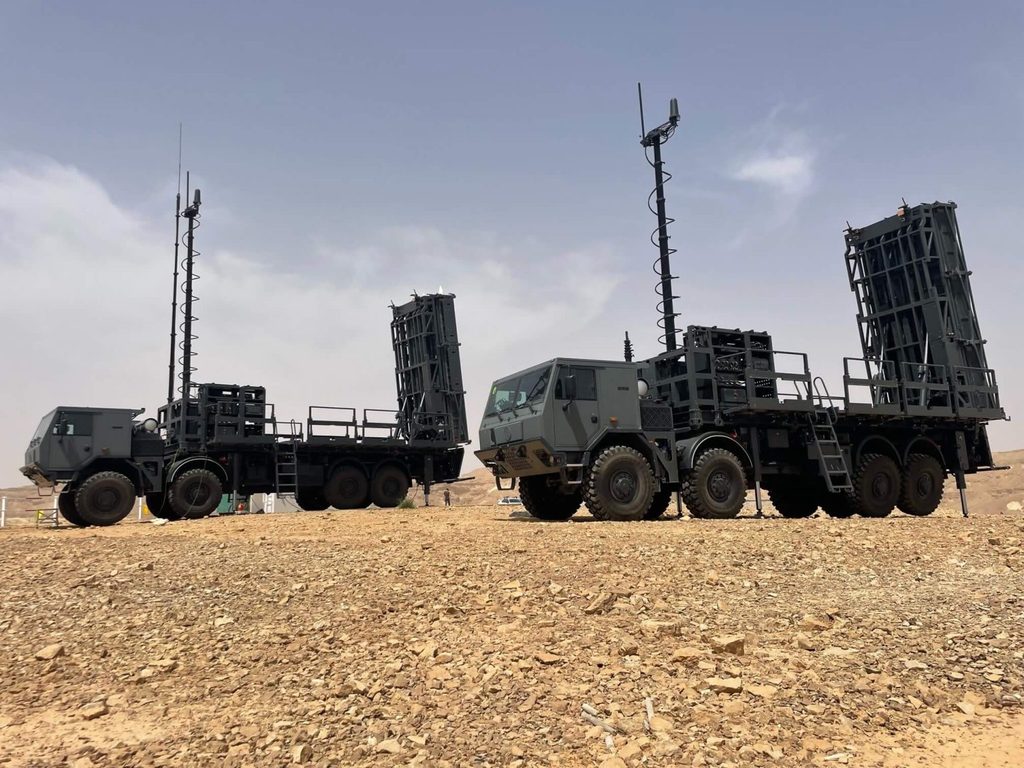
Rafael’s SPYDER family will provide another major component of Achilles’ Shield. SPYDER is a mobile air defense system designed to counter aircraft, helicopters, unmanned aerial vehicles, precision-guided weapons and other airborne threats.
The SPYDER family has evolved into several configurations covering different engagement requirements, including short-, medium- and extended-range applications, as well as the more recent SPYDER All-in-One configuration.
The system employs Rafael’s PYTHON-5 and I-DERBY ER interceptor families. PYTHON-5 uses an imaging infrared seeker, while I-DERBY ER incorporates an active radar seeker and an extended-range propulsion configuration.
The availability of different interceptors allows an air defense network to select an engagement solution according to the characteristics of the incoming threat. This flexibility has become increasingly relevant as air defense forces must simultaneously prepare for relatively inexpensive UAVs, conventional aircraft, precision weapons and more sophisticated missile threats.
BARAK MX and the Networked Defense Layer
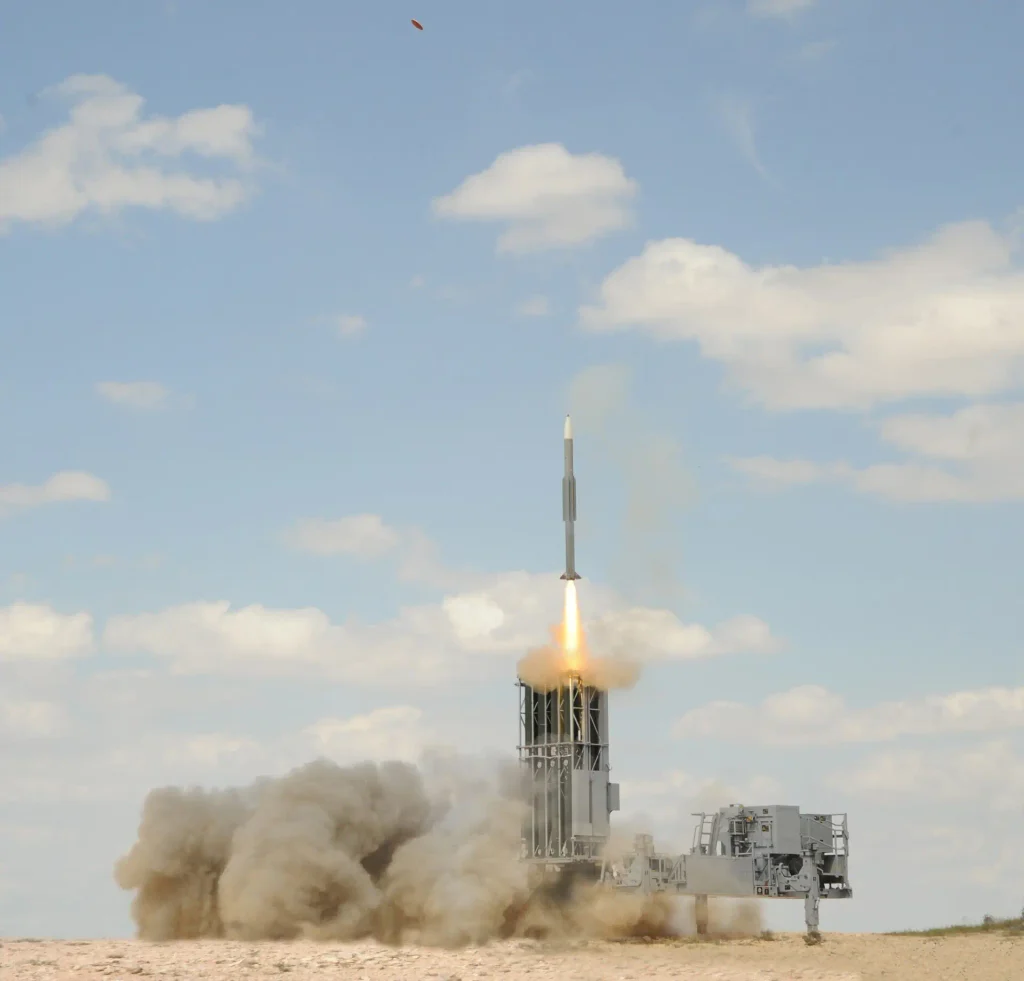
Israel Aerospace Industries’ BARAK MX will provide another principal layer of Achilles’ Shield.
BARAK MX is designed as an integrated, network-centric air and missile defense system built around an open and modular architecture. It can connect sensors, battle-management capabilities, launchers and different interceptors within a common framework rather than requiring individual batteries to operate independently.
The system is designed to address a broad spectrum of aerial threats, including aircraft, UAVs, cruise missiles and ballistic threats.
Its networked architecture is particularly relevant to Greece because of the country’s geography and the requirement to defend the mainland, islands, military installations and critical infrastructure across geographically dispersed areas.
A distributed structure in which sensors and effectors exchange information through a common network can provide greater operational flexibility than an architecture based primarily on independent air defense batteries.
ELTA MMR Multi-Mission Radars
The final agreement also confirms the inclusion of MMR multi-mission radars manufactured by ELTA Systems, a subsidiary of Israel Aerospace Industries.
The radars will provide surveillance, detection and tracking capabilities within the wider Achilles’ Shield network and will contribute targeting information to the command-and-control architecture.
The integration of radar data from multiple locations is central to the program’s concept. Rather than linking each radar exclusively to an individual missile battery, the broader architecture is intended to generate a common operational picture that can support engagements across the network.
This approach can potentially improve both the geographical coverage of the air defense system and the efficient allocation of interceptors against simultaneous threats.
National Command-and-Control System
One of the most important components of Achilles’ Shield will be the establishment of a new national command-and-control system, which the Israeli Ministry of Defense confirmed will be developed by Rafael.
The C2 architecture will consolidate the different air defense capabilities within a common framework, processing information generated by multiple sensors and supporting the identification, classification and prioritization of potential threats.
It will also support the selection of the appropriate defensive response according to factors including the nature and trajectory of the incoming threat and the availability of interceptors.
The development of this common command structure is particularly significant because Greece currently operates air defense systems originating from different countries and technological generations, including Patriot, S-300, TOR-M1 and OSA-AK systems.
Achilles’ Shield therefore provides an opportunity not only to introduce new systems but also to reorganize the country’s ground-based air defense architecture and progressively reduce reliance on ageing systems that are increasingly difficult to sustain.
Artificial intelligence and automated decision-support capabilities are also expected to contribute to the processing of large quantities of sensor information, particularly in scenarios involving multiple simultaneous threats.
Additional €26 Million Drone Dome Agreement
Alongside the main Achilles’ Shield agreement, Greece and Israel signed a supplementary agreement valued at approximately €26 million for the acquisition of Rafael’s Drone Dome counter-unmanned aerial system.
According to the Israeli Ministry of Defense, the systems will be used to protect strategic sites against UAVs and drones and reinforce Greece’s existing defenses.
The separate acquisition reflects the growing importance of counter-UAS capabilities within contemporary air defense architectures. Recent conflicts have demonstrated that conventional air defense systems must increasingly operate alongside specialized systems designed to detect and counter smaller and relatively inexpensive unmanned platforms.
Drone Dome will therefore complement the larger missile defense systems forming Achilles’ Shield rather than performing the same operational role.
Source-Code Access and National Control
A particularly important aspect previously identified by the Greek Ministry of National Defence concerns Greek access to source code associated with critical command-and-control capabilities.
Athens has emphasized the importance of maintaining national control over the software architecture used to operate and develop the network.
Depending on the final technical arrangements, access to the relevant software architecture could provide the Hellenic Armed Forces with greater flexibility to integrate additional sensors, weapons and domestically developed technologies in the future without depending entirely on foreign suppliers for subsequent modifications.
The detailed technical scope of the source-code arrangements has not been publicly disclosed.
This issue is particularly important for a system intended to remain in operation and evolve over several decades. Air defense networks require continuous adaptation as new sensors, interceptors, electronic warfare systems and threat categories emerge.
Greek Industrial Participation and Technology Transfer
Industrial cooperation represents another major component of Achilles’ Shield.
The final Israeli announcement confirms that, as part of the government-to-government cooperation between the Israeli and Greek defense ministries, Israel will expand industrial defense cooperation with Greece, including the transfer of knowledge and technology to Greek industry.
Greek officials have previously indicated that the program provides for at least 25% domestic industrial participation, corresponding to more than €700 million in work for Greek industry.
Approximately 12 Greek companies have been reported as potentially participating in different elements of the program.
Among the Greek companies previously named or reported in connection with the domestic participation are METLEN, Scytalys, Hellenic Defense Systems (EAS), Hellenic Aerospace Industry (HAI), Prisma Electronics, IONICS, Uni Systems and Sthenos.
Potential areas of participation include electronics, software, component manufacturing, vehicles and associated equipment, infrastructure, sensor interconnection, integration and technical and lifecycle support.
The final distribution of individual work packages has not been fully disclosed publicly.
The longer-term industrial significance of the program will depend not only on the financial value of Greek participation but also on the technological content of the work allocated to domestic companies. Participation in software development, electronics, systems integration, sensor networking and lifecycle support could establish capabilities extending well beyond the initial procurement.
Part of Greece’s Agenda 2030 Transformation
Achilles’ Shield forms part of Greece’s wider Agenda 2030 defense transformation, under which the Hellenic Armed Forces are undergoing extensive modernization across multiple operational domains.
The broader effort includes investments in combat aircraft, frigates, transport aircraft, unmanned systems, precision weapons, satellite capabilities, command-and-control infrastructure and the digital transformation of the Armed Forces.
Integrated air and missile defense has become an increasingly important component of this modernization as recent conflicts have demonstrated the rapidly changing nature of aerial warfare.
Modern air defense forces may be required to confront combinations of conventional aircraft, ballistic missiles, cruise missiles, precision-guided weapons, loitering munitions and large numbers of relatively inexpensive UAVs, potentially arriving simultaneously and from different directions.
The challenge consequently extends beyond acquiring interceptors. Effective defense increasingly depends on the ability to detect threats early, combine information from multiple sensors, rapidly identify and prioritize targets and allocate the most appropriate defensive system.
Achilles’ Shield is intended to provide Greece with this broader integrated architecture.
Expanding Greece-Israel Defense Cooperation
The agreement also marks a significant expansion of defense cooperation between Greece and Israel, which has developed steadily in recent years through procurement programs, military exercises, training and industrial partnerships.
Greece has become an increasingly important European customer for Israeli defense technology, while cooperation between the two countries has expanded into air defense, precision weapons, unmanned systems, counter-UAS capabilities and military training.
The scale and structure of Achilles’ Shield move this relationship beyond individual equipment purchases toward long-term cooperation involving systems integration, software, industrial participation, technology transfer and lifecycle support.
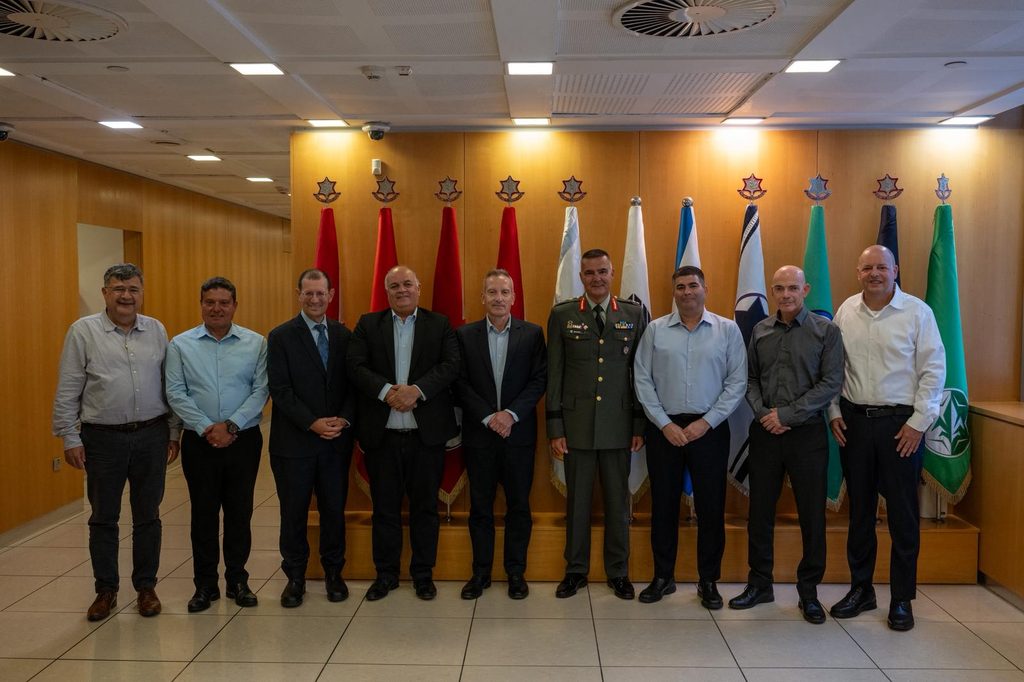
The signing ceremony was attended by senior representatives of the Israeli defense establishment and industry, including Head of SIBAT Brig. Gen. (Res.) Yair Kulas, Head of DDR&D Brig. Gen. (Res.) Dr. Daniel Gold, Head of the Israeli Missile Defense Organization Moshe Patel, Rafael CEO Yoav Tourgeman, IAI CEO Guy Barlev, and other officials.
Israeli Defense Minister Israel Katz described the agreement as part of the continuing expansion of the strategic and defense relationship between Greece and Israel, while Baram characterized Achilles’ Shield as a significant milestone in bilateral defense cooperation.
Rafael and IAI separately emphasized the inclusion of their respective systems in the Greek architecture. Rafael will have a central role through David’s Sling, SPYDER and the national command-and-control system, while IAI will participate through BARAK MX and ELTA’s MMR radar systems.
A Structural Change in Greek Air and Missile Defense
For Greece, the significance of Achilles’ Shield extends beyond the procurement of David’s Sling, SPYDER, BARAK MX, MMR radars and Drone Dome.
The principal challenge will be integrating these new capabilities with existing sensors and air defense assets into a coherent national network capable of responding to different categories of threat and evolving as technologies and operational requirements change.
The effectiveness of the industrial component will similarly depend on whether Greek participation and technology-transfer arrangements establish sustainable domestic capabilities in engineering, software, integration, production and long-term support.
If implemented as planned, Achilles’ Shield could represent a structural transformation of Greek ground-based air and missile defense: moving from a collection of systems acquired from different suppliers and technological generations toward a more integrated, networked and adaptable national architecture.
Its long-term importance will therefore be determined not only by the performance and range of its individual interceptors, but by the ability of the overall network to connect sensors, command-and-control systems and effectors across Greek territory—and by the extent to which Greece develops the domestic technological and industrial capacity required to support and evolve that architecture over the coming decades.
 English
  Greek
Greek