


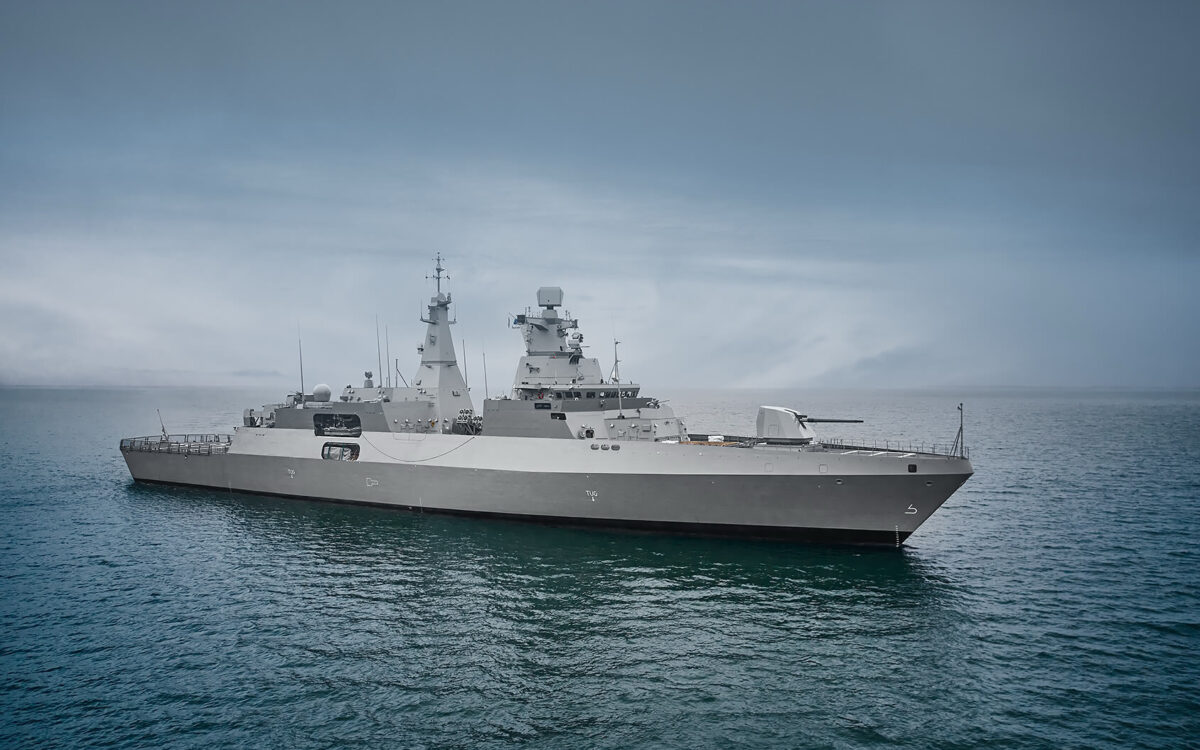
Germany Advances MEKO® A-200 Frigate Programme with Approval for Four New ASW Platforms
Berlin has taken a decisive step toward strengthening its naval capabilities, as the Bundestag’s Budget Committee approved the next phase of the MEKO® A-200 DEU frigate programme. The decision supports the planned procurement of four advanced frigates from thyssenkrupp Marine Systems (TKMS), marking a key milestone in Germany’s efforts to modernise its fleet and reinforce NATO’s maritime posture, particularly in anti-submarine warfare (ASW).
The approval extends the preliminary agreement signed at the end of January between TKMS and the Federal Office of Bundeswehr Equipment, Information Technology and In-Service Support (BAAINBw). This extension is critical, as it enables TKMS to maintain programme momentum by securing production capacity across its industrial base. It allows the company to engage subcontractors, initiate procurement of long-lead items, and begin ordering essential materials, equipment and specialised machinery ahead of the final construction contract.
The MEKO® A-200 design, already proven in international service, is known for its modular architecture, reduced radar signature and high operational flexibility. These features make it particularly suitable for modern naval missions, where adaptability and survivability are essential. For the German Navy, the new frigates are expected to significantly enhance ASW capabilities, addressing the growing importance of undersea domain awareness amid rising geopolitical tensions and increased submarine activity in European waters.
The timeline set out within the programme foresees the delivery of the first vessel by the end of 2029. This schedule is aligned with NATO capability targets and reflects Germany’s commitment to meeting alliance requirements in a timely manner. By initiating preparatory activities through a preliminary contract, the programme aims to reduce risk, avoid production bottlenecks and ensure a smoother transition into full-scale construction once final approvals are granted.
In the coming months, efforts will focus on finalising the detailed contractual framework and completing the necessary parliamentary review processes. These steps are essential before the full production contract can be formally awarded. At the same time, technical planning and industrial coordination will continue to advance, ensuring that the programme remains on schedule and within budget.
Beyond its operational impact, the MEKO® A-200 DEU programme also carries significant industrial implications. It supports Germany’s defence technological and industrial base, sustaining high-skilled jobs and reinforcing supply chains across multiple sectors. The early engagement of suppliers under the extended preliminary agreement highlights the importance of long-term planning and industrial readiness in large-scale defence programmes.
Overall, the approval of this next phase represents more than a procurement decision. It underscores Germany’s strategic intent to enhance its naval capabilities, contribute more effectively to NATO operations and respond to evolving security challenges in the maritime domain. As the programme progresses toward full contract signature, the MEKO® A-200 frigates are set to become a central pillar of the German Navy’s future force structure.
 English
  Greek
Greek