


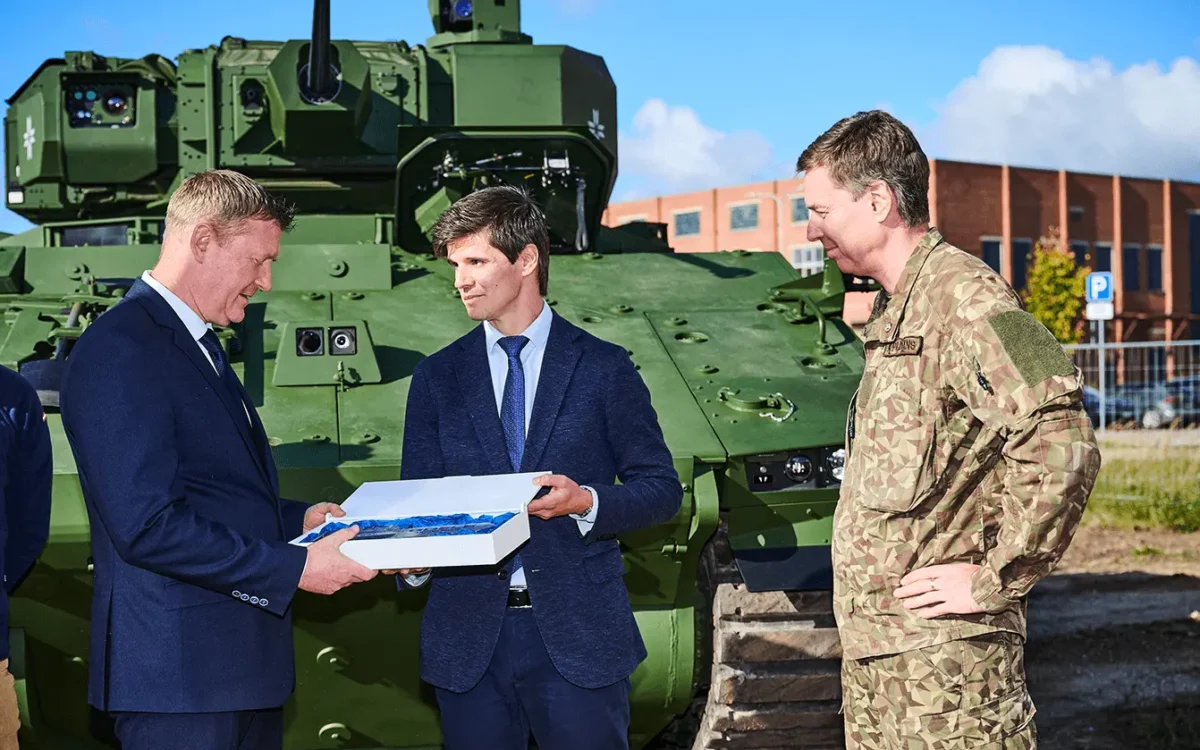
GDELS Hands Over First HUNTER Infantry Fighting Vehicle to Latvia
GDELS–Santa Bárbara Sistemas has officially handed over the first Latvian-assembled HUNTER infantry fighting vehicle to the Latvian National Armed Forces, marking a major milestone in the country’s mechanised capability development. Announced on 7 October 2026, the handover follows approximately eighteen months of work under a programme launched in early 2025. The contract between the Spanish company and Latvia’s Ministry of Defence covers 84 vehicles, scheduled for delivery by 2029, and requires at least 30 per cent local industrial participation. Beyond delivering new equipment, the programme is intended to strengthen Latvia’s domestic defence manufacturing and support capabilities.
HUNTER is the latest generation of the ASCOD tracked platform, adapted to Latvia’s operational requirements. The vehicle combines firepower, modular protection and mobility with interoperability alongside Latvian and NATO equipment. Designed to support modern mechanised infantry operations, it aims to improve survivability and operational effectiveness while providing a foundation for future upgrades. Latvian Defence Minister Raivis Melnis described the acquisition as an important step in strengthening the mobility, protection and firepower of mechanised units. He also emphasised the significance of domestic industrial involvement, linking the programme to the development of national technological expertise and closer cooperation with NATO allies.
According to GDELS–Santa Bárbara Sistemas, the first platform was designed, developed, manufactured, integrated and tested within 14 months. Following its unveiling and delivery in April 2026, work continued in Latvia through an intensive integration and validation phase. This included turret integration, system verification, military personnel training, customer testing and formal acceptance procedures. The Latvian National Armed Forces accepted the vehicle in September 2026, ahead of the ceremonial handover. The progression from contract signature to acceptance illustrates the coordinated engineering, production and customer activities required to deliver a vehicle configured for specific national needs within a demanding schedule.
Alejandro Page, Chief Executive Officer of GDELS–Santa Bárbara Sistemas, attributed the milestone to cooperation between the company, Latvian industrial partners, the Ministry of Defence and the armed forces. He highlighted the programme’s contribution to local expertise and Latvia’s defence technological and industrial base, presenting it as an example of European industrial cooperation supporting capability delivery. Assembly and lifecycle support are being undertaken with Latvian defence companies and through a strategic partnership with Patria Latvia. These arrangements establish a domestic support framework for the fleet and provide opportunities for further collaboration on capability development, maintenance and innovative solutions throughout the vehicles’ service lives.
The programme also includes ongoing testing and integration of a counter-uncrewed aerial systems concept, covering threat identification, detection and interception. This work explores how HUNTER could contribute actively to protection against airborne threats, alongside its infantry fighting role. The capability remains under development and integration, reflecting the growing importance of counter-drone measures for armoured formations. HUNTER’s open, modular architecture is intended to accommodate new technologies without extensive platform redesign or prolonged development programmes. This approach supports continued adaptation as battlefield requirements change, allowing Latvia to build on the initial vehicle configuration while maintaining opportunities for industrial participation and incremental capability improvements over the longer term.
 English
 Greek