


EURONAVAL 2026: Preparing for the Future of Naval Warfare
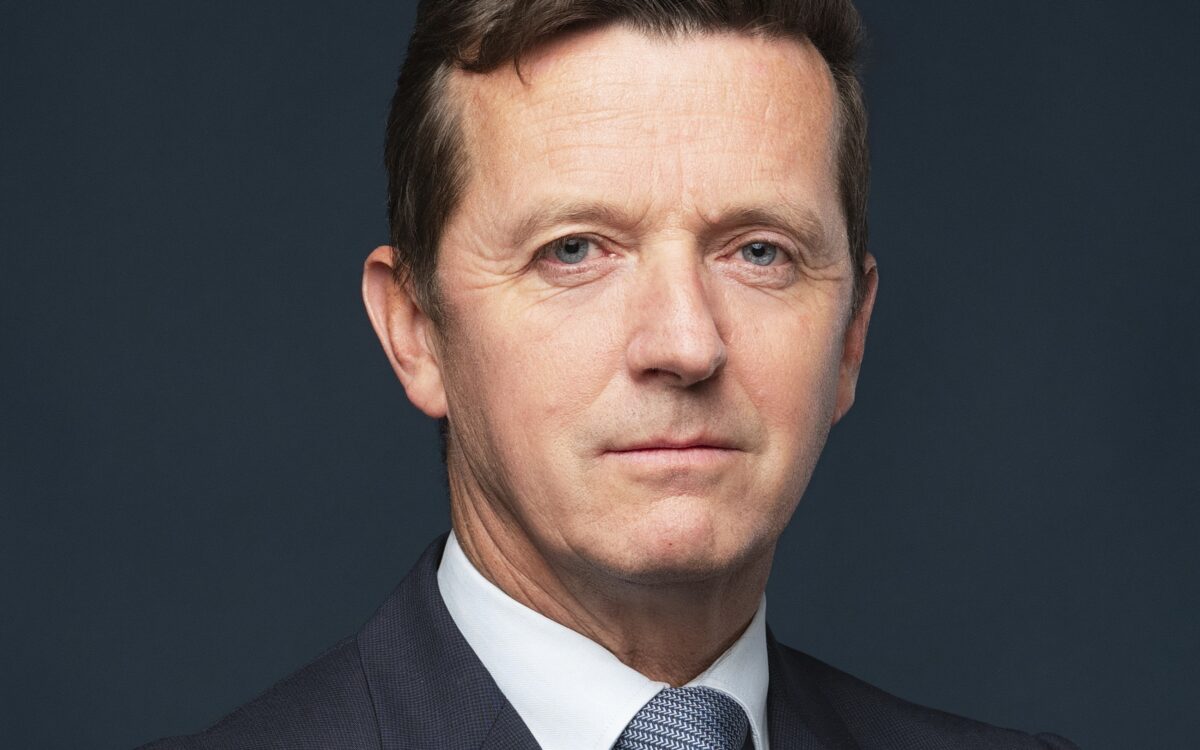
In an exclusive interview with Euroatlantic Defence News, Rear Admiral Guillaume Merveilleux du Vignaux, General Commissioner of EURONAVAL, outlines his priorities for the exhibition’s 30th edition. He discusses the return of high-intensity naval warfare, the growing role of autonomous systems and artificial intelligence, and the challenge of translating technological innovation into resilient operational capabilities at industrial scale.
Euroatlantic Defence News: As you prepare for your first EURONAVAL as General Commissioner, what are your main priorities for the 2026 edition?
Rear Admiral Guillaume Merveilleux du Vignaux: This will be the 30th edition of EURONAVAL, which has held its position as the world’s leading naval defence exhibition for nearly 60 years. We will have a record edition this year, with 35% more exhibiting companies than in 2024. My first priority will be the same as that of my predecessors: to ensure that EURONAVAL remains the benchmark exhibition for the sector, in terms of both reach and the quality offered to exhibitors and visitors.
To achieve this, the show will be a true reflection of the changes taking place at sea and in the naval defence industry. Having spent much of my career at sea and in operational and strategic positions, I am particularly attentive to the gap that can sometimes exist between technological innovation, industrial capacity and operational needs. EURONAVAL helps bridge that gap by bringing these communities together and creating opportunities for genuine dialogue.
I also want this edition to showcase the extraordinary diversity of the naval industry, from major companies to SMEs and innovative start-ups, while making room for the growing number of players looking to develop their activities in this sector. I am thinking in particular of companies outside the traditional naval defence ecosystem, those offering dual-use solutions, and investors. This diversity will also be reflected in the international nature of the exhibition, with more than 40 countries represented by exhibitors.
Ultimately, my ambition is simple: EURONAVAL should help us understand where naval warfare is heading and help industry and navies prepare for it.
Euroatlantic Defence News: What changes in the strategic environment are having the greatest influence on naval requirements and the technologies that will be presented at EURONAVAL 2026?
Rear Admiral Guillaume Merveilleux du Vignaux: The strategic backdrop to EURONAVAL 2026 includes the worrying rise in international tensions and the uninhibited behaviour of certain actors who do not hesitate to escalate rapidly to extremes. There is also a tendency to operate in the grey zone and exploit ambiguity. Added to this are the growth of trafficking, increased competition for marine natural resources and, of course, the effects of climate change. These compounding tensions are driving a global wave of rearmament as nations seek to hedge against emerging risks.
Copyright © 2026: EURONAVAL- Rear Admiral Guillaume Merveilleux du Vignaux, General Commissioner of EURONAVAL
Conflicts are spilling over into the sea. The most visible impact on the naval sector is therefore the return of high-intensity warfare. This is why we chose this theme for EURONAVAL 2026. The growing possibility of operations against capable and well-equipped adversaries is putting renewed emphasis on survivability, lethality, endurance and the ability to operate in contested environments.
At the same time, the maritime domain is becoming increasingly complex and congested. Strategic chokepoints, critical infrastructure and maritime trade routes are more exposed, while the growing presence of shadow fleets, maritime militias and other ambiguous actors makes identification and decision-making at sea more difficult.
Counterbalancing this trend is the growing transparency of the maritime environment. The multiplication of sensors, their increasing accessibility through dual-use technologies, and their deployment across all layers—from the seabed to space and in the cyber domain—make it possible to observe, track and correlate activity with an unprecedented level of persistence and geographical coverage.
Drones are instrumental to this trend. They provide increasingly affordable and scalable means of surveillance and data collection. The huge amount of data collected is also becoming easier to process with the help of artificial intelligence. This growing transparency can improve maritime domain awareness, but it also raises new questions about concealment, deception, data exploitation and the protection of forces operating in increasingly observable environments.
Another development is the rapid evolution of the threat environment. Navies now face mines, drones and increasingly complex missiles and torpedoes. This raises the question of the high/low mix: how to strike the right balance between these capabilities, both offensively and defensively. It is driving innovation in sensors, multilayered defence, electronic warfare, autonomous systems and information superiority.
EURONAVAL’s specific contribution is to bring these different dimensions together. Naval power depends notably on the ability to integrate available technologies and, with the return of high-intensity warfare, to produce them at scale and sustain them over time.
Euroatlantic Defence News: How is EURONAVAL adapting to the growing role of unmanned surface, underwater and aerial systems in naval operations?
Dear Admiral: EURONAVAL will outline the transition from individual unmanned platforms towards integrated, networked and increasingly autonomous naval capabilities. It will reflect the way autonomy is changing naval operations across the entire spectrum: surveillance, intelligence, mine warfare, force protection, logistics and strike.
More than 10% of our 670 exhibitors are dedicated exclusively to unmanned systems, while many others include drones in a broader portfolio or provide technologies that enable increasingly autonomous operations.
The 2026 edition therefore gives particular visibility to unmanned surface, underwater and aerial systems, while also highlighting the technologies that enable their effective employment: propulsion and autonomy, artificial intelligence, sensors, communications, navigation and command and control.
Euroatlantic Defence News: Navies are increasingly focused on operating crewed and uncrewed platforms together. What developments should visitors look for in command systems, connectivity and the integration of these platforms?
Dear Admiral: EURONAVAL provides a view beyond individual platforms, focusing on the architectures that enable crewed and uncrewed systems to operate as a coherent force. In command systems, this means greater automation in tasking, data fusion and decision support, while preserving appropriate human control.
Connectivity will be equally critical, with resilient communications, distributed networks and the ability to operate despite degraded or contested links.
Another important development is the growing integration of autonomous systems into existing naval platforms and wider combat architectures. This includes not only software and interfaces, but also the physical integration of vehicles, sensors and effectors: launch and recovery, handling, storage, power, data links and maintenance.
The challenge is therefore increasingly one of system integration and architecture, combining different platforms and levels of autonomy into a flexible, scalable and operationally coherent whole.
Euroatlantic Defence News: What role will artificial intelligence, cyber resilience and quantum technologies play in this year’s exhibition and conference discussions?
Dear Admiral: Artificial intelligence, cyber resilience and quantum technologies will feature both on the EURONAVAL exhibition floor and in the conference programme, but from different perspectives.
AI is increasingly embedded across the naval ecosystem, from decision support and data fusion to autonomy, surveillance and maintenance. Cyber resilience will be addressed as a fundamental requirement for connected and increasingly distributed naval architectures, particularly in degraded or contested environments.
Quantum technologies are at an earlier stage of maturity, but their potential impact on sensing, navigation, timing and secure communications makes them a very important area to watch. Major naval defence groups and deep-tech innovators will showcase quantum-enabled solutions at EURONAVAL 2026, including exhibitors and start-ups selected for the SEAnnovation space, such as Kwan Tek. These companies are developing next-generation quantum technologies designed to maintain tactical superiority above, on and below the surface.
EURONAVAL will therefore look at these technologies as building blocks of future naval capabilities. This approach was already reflected in our January conference in Brussels, dedicated to the impact of AI and quantum technologies on maritime operations, and will be pursued in November.
These topics and many others will be discussed at EURONAVAL through conferences and interviews structured around four daily themes: “Information superiority and maritime domain awareness”, “Resilient and scalable platforms”, “The new dimensions of naval warfare” and “From innovation to operational capability”.
Euroatlantic Defence News: What do you expect from this year’s international delegations, and how does the exhibition help turn discussions between navies and industry into practical cooperation?
Rear Admiral: We expect a very strong international presence, with around 130 official delegations and many other visitors from around the globe, reflecting the international community’s interest in maritime security and naval capability.
EURONAVAL provides a unique opportunity for navies, procurement authorities and industry to meet around concrete operational requirements, compare approaches and identify areas for cooperation.
The exhibition plays a key role in turning discussions into practical opportunities by bringing decision-makers directly into contact with technologies and industrial capabilities that are available today and can address their needs.
EURONAVAL is a place where different naval cultures and operational perspectives meet. The conferences, official delegations and business meetings complement the exhibition itself, creating an environment where strategic discussions can be connected to concrete technologies, industrial capabilities and requirements.
Euroatlantic Defence News: Looking beyond the 2026 edition, which technological or industrial challenge do you believe will most shape the future of naval defence?
Rear Admiral: From a purely technological perspective, autonomy and artificial intelligence will clearly be among the most transformative developments, while quantum technologies could become very significant over the longer term. More broadly, I would point to the ability to combine technological sophistication with industrial scale and adaptability.
Naval warfare is becoming increasingly complex, with crewed and uncrewed platforms, sensors, networks and effectors operating together in contested environments. Integrating technologies into coherent and resilient systems, while keeping them affordable, maintainable and capable of evolving over time, will be key. This will be the main theme of the conferences on the second day of EURONAVAL 2026.
As for the scale challenge, the need is to combine high-end capabilities with greater capacity to produce, repair, upgrade and replace systems at scale. Supply chains, access to critical technologies, skilled personnel and the ability to adapt production will therefore be extremely important.
EURONAVAL’s role is to shed light on this future.
 English
  Greek
Greek