


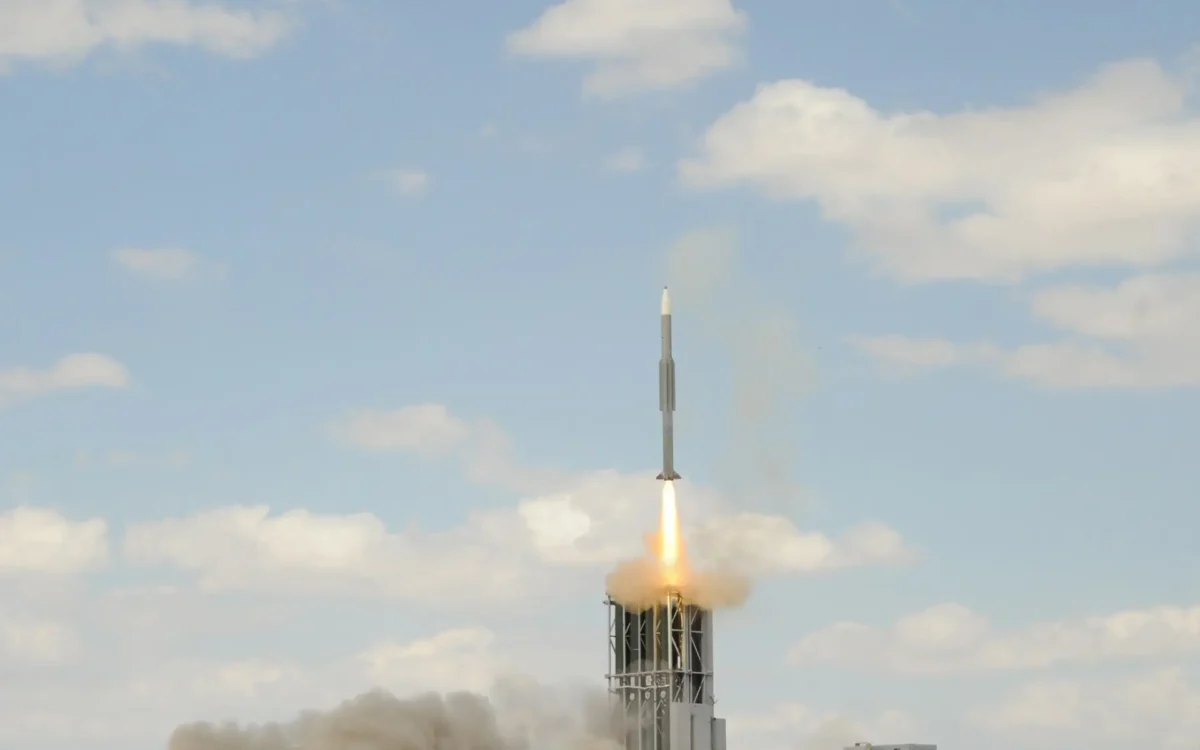
Israel Delivers BARAK MX Air Defence System to Slovak Armed Forces
The Israel Ministry of Defense (IMOD), through its Defense Export Directorate (SIBAT), in cooperation with Israel Aerospace Industries, has announced the delivery of the advanced BARAK MX air defence system to the Slovak Air Force under a €560 million agreement signed in 2024. The delivery was completed ahead of schedule and includes comprehensive training and operational readiness support, marking a significant milestone in Slovakia’s ongoing efforts to modernise its national air defence capabilities and strengthen its contribution to NATO’s collective security framework.
The introduction of the BARAK MX system represents a substantial enhancement of Slovakia’s ability to defend its airspace against a full spectrum of modern aerial threats, including unmanned aerial vehicles, fighter aircraft, cruise missiles, and ballistic missiles. Designed as a multi-layered and highly flexible solution, the system is engineered for land-based, naval, and mobile deployment, offering operational adaptability across a wide range of mission environments. Its architecture integrates three advanced interceptor variants with engagement ranges of approximately 35 kilometres, 70 kilometres, and up to 150 kilometres, enabling precise and simultaneous interception of multiple threats in complex and saturated operational scenarios.
At the core of the BARAK MX system is a sophisticated network of multi-mission radars that provide high-performance detection, classification, and tracking capabilities. This integrated sensor and interceptor architecture allows for rapid response times and effective engagement across different threat profiles, ensuring a layered defence approach that aligns with modern NATO operational standards. The system’s deployment in Slovakia further reflects the growing demand among European nations for advanced, reliable, and rapidly deployable air defence solutions in response to evolving regional and global security challenges.
According to Israel Katz, the delivery highlights the strength and technological maturity of Israel’s defence industry, particularly in light of recent operational experience that has demonstrated the effectiveness of its systems in real-world combat environments. He emphasised that the agreement not only enhances Slovakia’s defence capabilities but also serves as a platform for deeper industrial cooperation, knowledge transfer, and the development of local production capacities, reinforcing bilateral ties and expanding Israel’s role as a strategic defence partner.
IMOD Director General Amir Baram underlined that the programme reflects the depth of the strategic relationship between Israel and Slovakia, noting that defence exports play a central role in supporting Israel’s military force development, economic growth, and international partnerships. He added that the integration of BARAK MX into a European NATO member state underscores the operational credibility and interoperability of Israeli defence technologies within allied frameworks.
Slovak Deputy Prime Minister and Minister of Defense Robert Kaliňák confirmed that the first battery has already been deployed at an undisclosed location and is currently undergoing final operational integration, with full readiness expected in the coming weeks. Additional system components are scheduled for delivery throughout the year, alongside continued training of Slovak personnel and the presence of international technical experts.
IAI President and CEO Boaz Levy noted that the Slovak decision to procure BARAK MX reflects strong confidence in the system’s technological superiority and operational effectiveness. He highlighted the close cooperation between Israeli and Slovak teams, which enabled rapid adaptation to operational requirements and ensured timely delivery and training completion.
The programme also includes significant collaboration with Slovak industry, supporting local production, technology transfer, and broader economic benefits. The delivery of BARAK MX to Slovakia not only strengthens national and alliance-level defence capabilities but also signals a broader trend of increasing European investment in advanced air defence systems amid a rapidly evolving security environment.
 Greek
Greek  English