


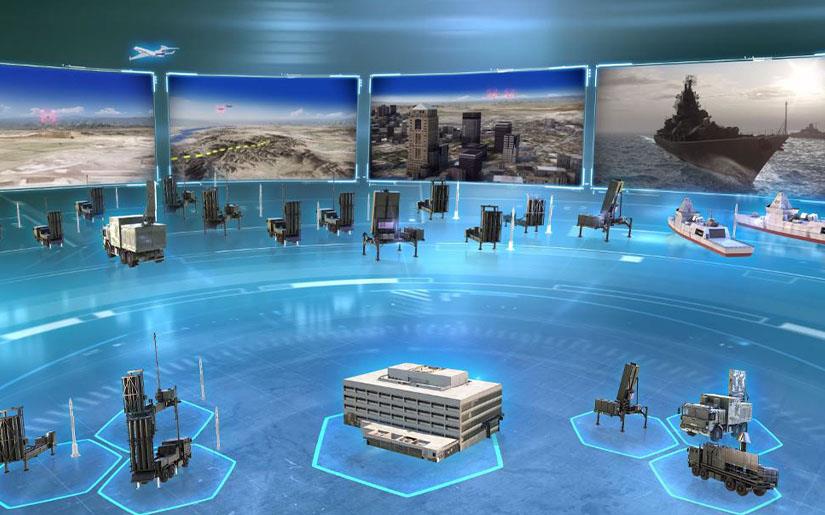
Greece to develop $2 billion ‘Iron Dome’ for enhancing its air defence capabilities
Greece is currently in progress to develop its own advanced air defense system, similar to Israel’s Iron Dome, as part of a broader strategy to modernize its military. This system is expected to be a multi-layer defense network aimed at countering short- and long-range missile threats, including drones, and will be designed to strengthen Greece’s defense capabilities amidst ongoing tensions with its eastern neighbor, Turkey.
The deal could be worth around €2 billion ($2.11 billion) and is part of a larger effort by Greece to invest in its military following the country’s recovery from a prolonged debt crisis. This is in line with Greece’s broader goal of spending €12.8 billion by 2035 to modernize its armed forces, which also includes plans to acquire up to 40 F-35 fighter jets, drones, and French-built frigates and Rafale jets.
Greece and other European countries, such as Germany and Finland, have sought Israeli air defense systems to bolster their military capabilities, further highlighting the demand for such advanced technologies. Through these initiatives, both Greece and Israel aim to enhance their defense collaboration and ensure their armed forces are prepared for modern threats.
Developed by Rafael Advanced Defense Systems and Israel Aerospace Industries, IRON DOME is the most deployed air defense system, has intercepted 5000+
rockets with an over 90% success rate – saving lives since 2011. IRON DOME is the only multi-mission, combat-proven system capable of simultaneous protection against a broad spectrum of increasingly diverse threats – including air breathing as well as SHORAD, C-RAM and PGM threats – in high-density salvos, day and night, and in all weather conditions. Continuously evolving, the IRON DOME Family – includes the C-DOME naval version – as well as the mobile I-DOME– enables an end-to-end air defense solution, protecting land, maneuvering, and maritime forces as well as strategic assets and civilian population centers. IRON DOME can function as a standalone system or as part of a multilayer air defense system.
The Iron Dome system has proven highly effective in intercepting short-range missile threats. The Greek version of this system will likely feature similar technology for intercepting both missiles and drones. Additionally, Israel has other systems like David’s Sling and Arrow for longer-range threats, which are more expensive but provide comprehensive defense coverage. The development of these systems reflects the growing defense concerns in Europe, particularly with rising geopolitical tensions and regional conflicts.
The European Sky Shield Initiative (ESSI) is a significant project aimed at creating a unified, ground-based air defense system for Europe, integrating capabilities to defend against various airborne threats, including ballistic missiles. The initiative was launched in response to growing concerns about Europe’s ability to defend against missile attacks, particularly in light of Russia’s missile strikes on Ukraine’s infrastructure during the 2022–2023 period. It was proposed by German Chancellor Olaf Scholz in August 2022, as a way to bolster European defense capabilities and counter threats like the Russian 9K720 Iskander missile system.
© IAI- Integrated air defense system BARAK MX
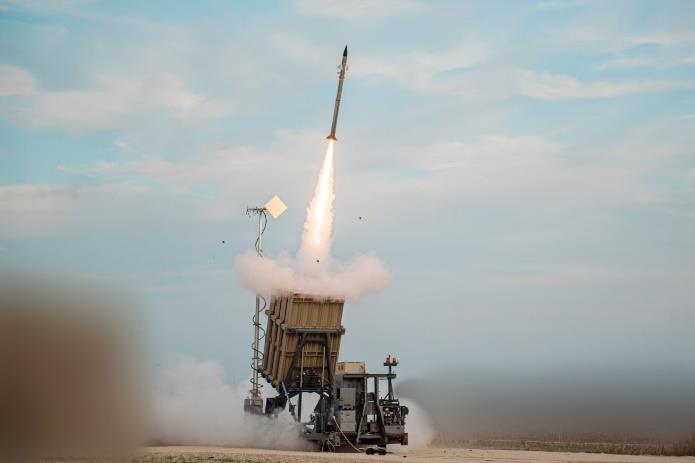
© Developed by Rafael Advanced Defense Systems and Israel Aerospace Industries, IRON DOME
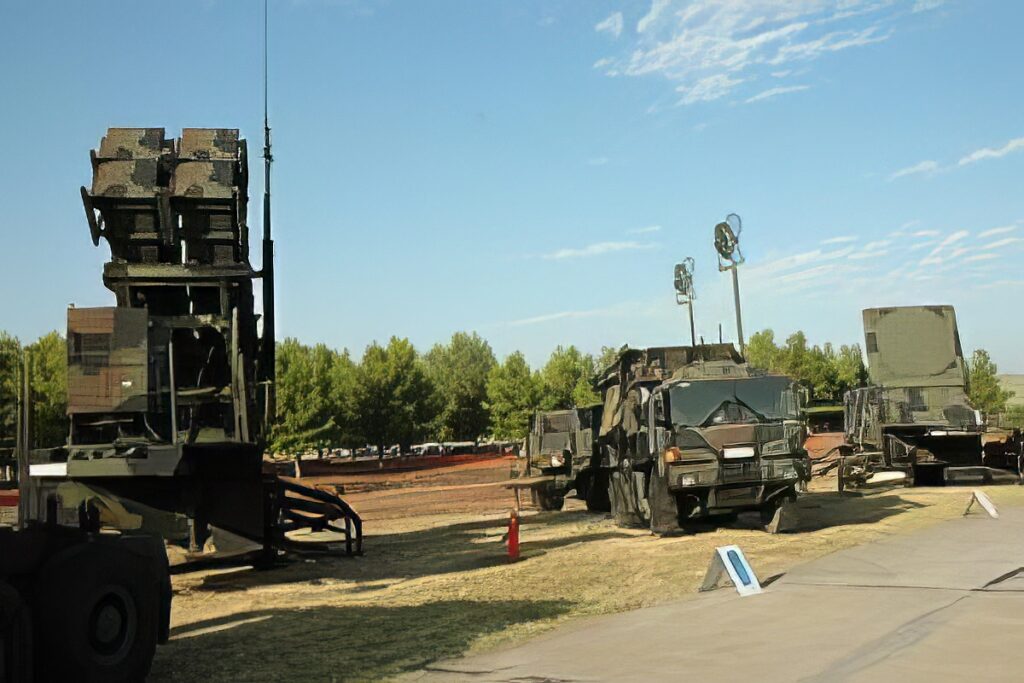
© Hellenic Air Force/ PATRIOT PAC-III
In October 2022, fifteen European states (Belgium, Bulgaria, the Czech Republic, Estonia, Finland, Germany, Hungary, Latvia, Lithuania, the Netherlands, Norway, Slovakia, Slovenia, Romania, the United Kingdom) signed a declaration to join the German-led initiative. The initiative began with 15 European countries, including NATO members such as Germany, the Netherlands, the United Kingdom, and Finland, which joined after its accession into NATO in 2023. Greece and Turkey were added to the project in February 2024, signaling broader regional participation despite their long-standing tensions. Denmark and Sweden joined the initiative in February 2023, and Austria and Switzerland, traditionally neutral, signed up in mid-2023, challenging their neutrality policies. The ESSI emphasizes joint procurement of air defense systems to achieve a more coordinated and effective defense across European nations. It also aims to strengthen NATO’s Integrated Air Defence System, ensuring a cohesive approach to managing air defense resources.
However, the initiative has faced some opposition, particularly from France, which has expressed dissatisfaction with the ESSI’s heavy reliance on non-European technologies and the exclusion of the French-Italian SAMP-T system, which it views as an important component of European defense. In response, France proposed a counter-initiative, calling for alternative systems to be considered in the development of a European air defense framework. As of mid-2023, some major European countries, including France, Poland, Italy, and Spain, had not yet committed to joining the ESSI, with Poland indicating interest in an alternative European air defense system focused on countering drone and missile threats by 2024.
The ESSI represents a growing recognition in Europe of the need for collective defense against emerging threats, particularly in the context of regional security challenges, such as Russia’s aggressive actions and rising tensions in other parts of Europe. While France’s concerns reflect ongoing debates about the balance between European sovereignty and cooperation with non-European defense technologies, the ESSI has garnered significant support and is shaping up to be a key part of Europe’s future defense infrastructure.
The ESSI will use multi-layered defence, with the following systems planned:
- Short range: Skyranger 30
- Medium range: primarily IRIS-T SLM
- Long range: MIM-104 Patriot
- Very long range (exoatmospheric): Arrow 3
On 17 September 2024, during the Second European Air and Missile Defence conference held in Rome today, Sébastien Lecornu, French Minister of Armed forces, officialised the contract signed through OCCAR-EA to launch the serial production of seven SAMP/T NG sections for the French Air and Space Force. With this latest order, the SAMP/T NG system is preparing the full-scale serial production phase.
This order is an additional step towards the renewal of the European Medium-Range Air Defence ground capabilities, following the SAMP/T NG development launched by the two Nations in 2021. It completes the SAMP/T NG sections ordered respectively in July 2023 for the Italian Air Force and early 2024 for the Italian Army.
The PATRIOT PAC-III system is a highly sophisticated, long-range air defense system of U.S. origin that has been operational with the Hellenic Air Force since 2003. It is designed to provide robust defense against a wide range of airborne threats, including aircraft, tactical ballistic missiles, and cruise missiles. This system is mobile, which makes it versatile in deployment and capable of responding quickly to evolving threats.
Here are the key details and components of the PATRIOT PAC-III system: it has a search radar range of up to 170 km, which enables it to detect incoming threats from significant distances. The system can engage targets at a maximum range of 150 km, allowing it to intercept threats long before they reach critical targets.
The Information Coordination Center (ICC) serves as the operational hub, coordinating the overall functioning of the system. It processes information from various sensors, determines priorities, and helps direct the defense efforts. The system is capable of tracking multiple targets and intercepting them at long ranges, providing a layered defense against incoming missiles and aerial threats. Its mobility allows it to be rapidly repositioned to various locations as required, ensuring optimal coverage of sensitive areas. The PAC-III variant of the PATRIOT system specifically enhances the capability to intercept ballistic missiles, making it highly effective in scenarios where there is a risk of missile strikes from adversaries.
 Greek
Greek  English