


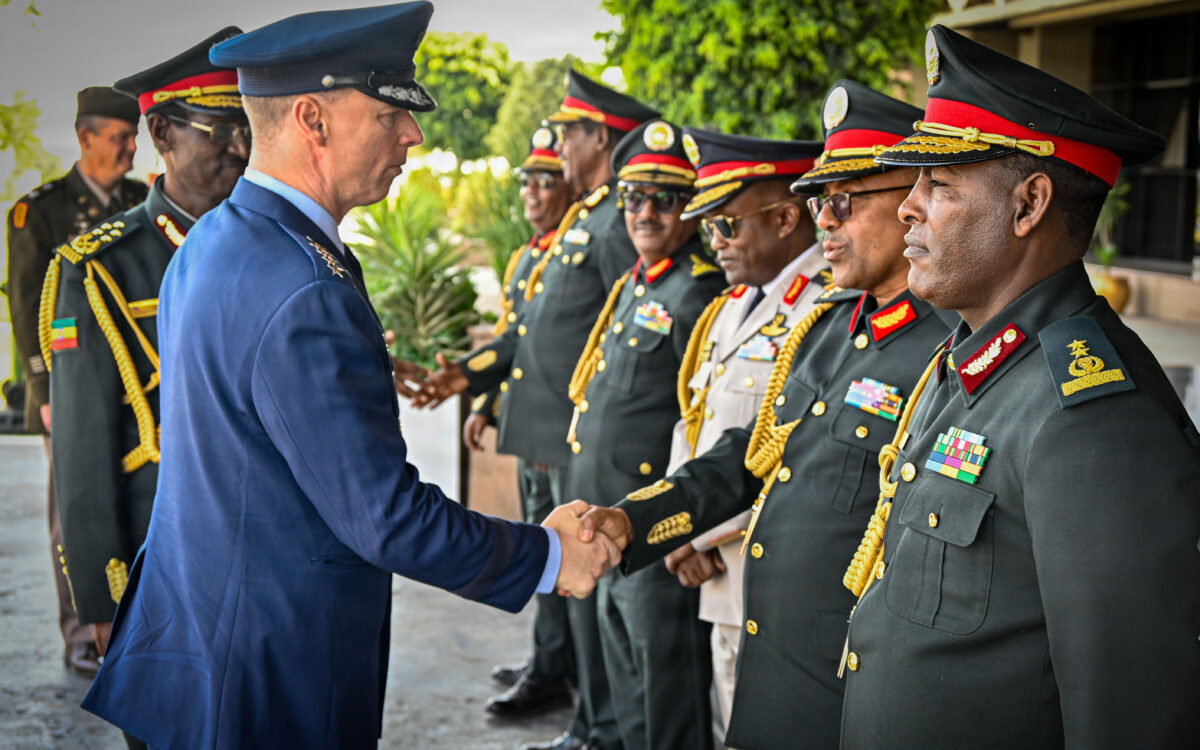
AFRICOM Commander makes high-level visits to East Africa
U.S. Africa Command (AFRICOM) Commander Gen. Dagvin Anderson’s recent visit to East Africa marks a significant diplomatic and strategic effort to strengthen cooperation with key regional partners. His trip, which included stops in Ethiopia and in Somalia’s federal member states of Somaliland and Puntland, is the first phase of a broader series of high-level engagements aimed at reinforcing joint security initiatives in response to rising threats across the continent.
Throughout his visit, Gen. Anderson emphasized that the United States remains committed to a “maximum pressure” approach against ISIS, al-Shabaab, and other violent extremist organizations. He noted that terrorist activity in East Africa, the Sahel, and West Africa’s coastal regions has grown increasingly complex, demanding coordinated and collective action. No single nation, he stressed, can confront these challenges alone; success requires shared responsibility, burden-sharing, and aligned security priorities.
In Ethiopia, Anderson met with Prime Minister Abiy Ahmed and the Chief of Defense, Field Marshal Birhanu Jula Gelelcha. Their discussions focused on the expanding threat posed by ISIS and al-Shabaab, as well as the importance of deepening defense cooperation. Despite the internal and regional challenges Ethiopia has faced in recent years, the country remains a central stabilizing actor in the Horn of Africa. Anderson highlighted Ethiopia’s role and reaffirmed Washington’s intention to support regional partners who demonstrate willingness and capacity to counter terrorism.
His next stop was Somaliland, where he held discussions with President Abdirahman Mohamed Abdullahi and senior military leaders, including the chief of the Somaliland Armed Forces and the commander of the Somaliland Coast Guard. During his stay, he also traveled to the strategic port city of Berbera. There, he assessed the security environment and evaluated the port’s operational capabilities—an important step given Berbera’s growing significance as a maritime hub with potential implications for regional security and U.S. cooperation efforts.
The final leg of Anderson’s trip was Puntland, where he met with Vice President Ilyas Osman Lugatoor and Gen. Adan Abdi Hashi, chief of the Puntland Defense Forces. Anderson praised Puntland’s progress in its ongoing campaign against ISIS militants entrenched in the Golis
Mountains. He acknowledged that the region’s counterterrorism efforts have yielded tangible results but stressed the importance of intensifying operations to maintain momentum and fully neutralize extremist elements.
Across all stops, Anderson’s core message remained consistent: the United States will continue to support African partners who are achieving measurable gains in the fight against terrorism. AFRICOM’s involvement in Africa, he said, is not only about supporting regional stability but also about protecting global security, including the security of the U.S. homeland. Africa remains a dynamic and strategically significant theater where security developments directly affect European and international stability.
Gen. Anderson concluded by underscoring the need for unity and cooperation. “As we face growing security threats, collective efforts are more important than ever,” he said. “Together we can build a more prosperous and secure future for the United States, for Africa, and most importantly, for our children.”
 Greek
Greek  English