


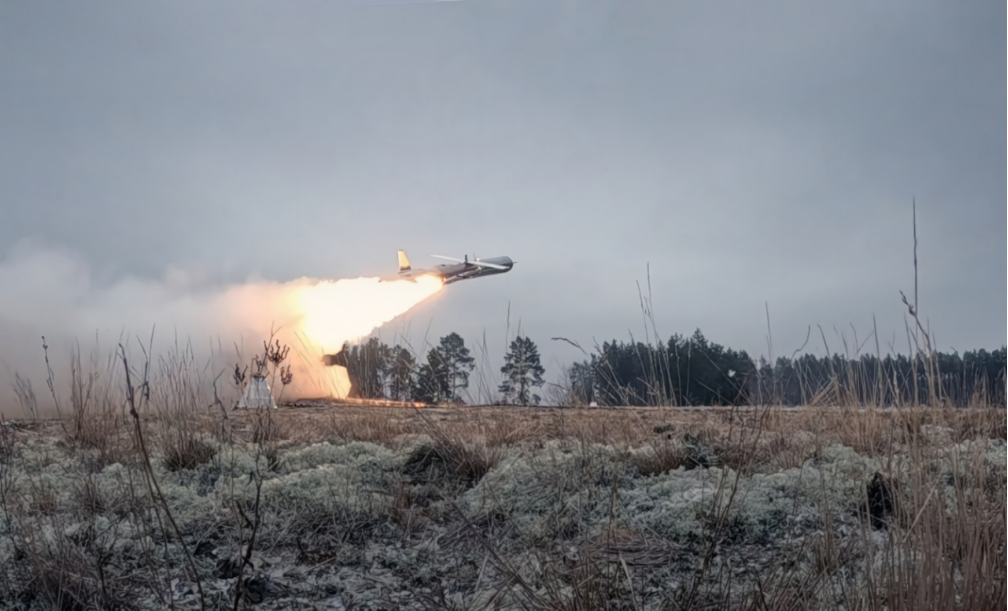
A European Industrial Partner for the Eastern Flank
In an era defined by accelerating threats and the growing importance of industrial capacity in defence, Destinus is positioning itself as a new-generation European manufacturer focused on scalable, cost-effective capability. Built for what its leadership describes as the “age of mass-produced threats,” the company develops and produces strike and air defence systems designed not only for performance, but for rapid deployment, sustainment, and replenishment.
With a portfolio that includes cruise missiles, loitering munitions, and kinetic interceptors, Destinus combines a unified autonomy architecture with deep vertical integration and an industrial manufacturing approach aimed at delivering capability at scale. This model reflects a broader shift in European defence priorities, where speed of production, affordability, and operational availability are becoming as critical as technological sophistication.
In this exclusive interview with EUROATLANTIC DEFENCE NEWS, Oleksandr Danylyuk, President of Destinus, outlines the company’s vision, technological approach, and its role in strengthening Europe’s defence industrial base. He also shares insights on the evolving requirements of NATO’s eastern flank, the importance of industrial partnerships, and how Europe can translate strategic intent into deployable military capability in an increasingly demanding security environment.
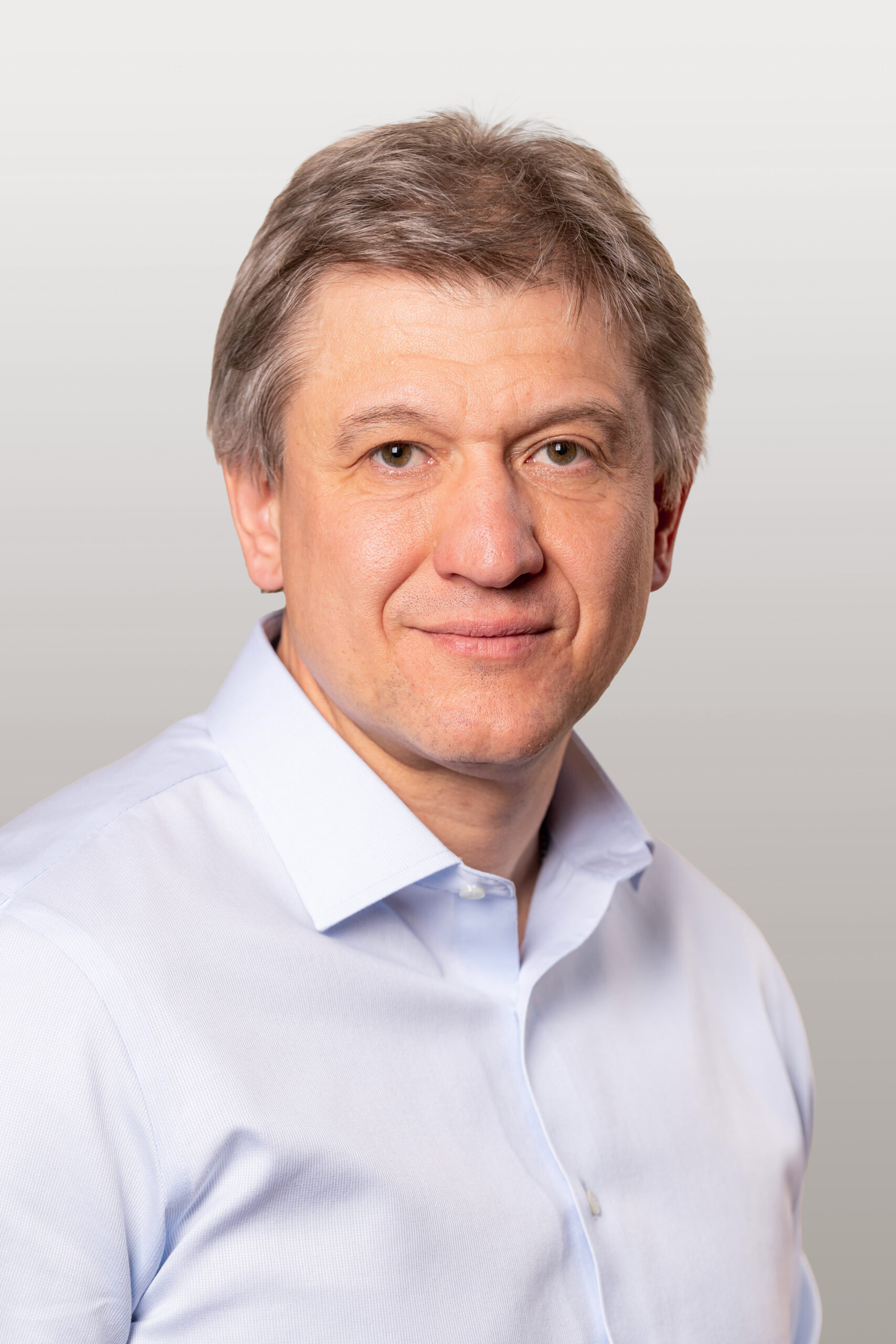
Oleksandr Danylyuk, President of Destinus
EUROATLANTIC DEFENCE NEWS: Destinus began as an advanced aerospace company. Why did you decide that Europe’s most urgent need was defence industrial capability, and what does the company manufacture today?
Danylyuk: Destinus entered defence because Europe’s problem is no longer recognizing the threat. It is turning urgency into usable output. Europe has strong engineers, serious research institutions, and no shortage of strategy papers. What it has lacked is enough deployable capability produced at speed inside its own industrial base.
Our aerospace background matters because it gave us the engineering disciplines that defence now requires propulsion, embedded software, autonomy under control, systems integration, structures, testing, and scalable manufacturing. The lesson from the current security environment is simple. Military relevance is not defined only by technical performance. It is defined by whether systems can be fielded in useful numbers, sustained over time, and replenished under pressure.
Today, Destinus focuses on two core areas: strike systems and interceptor systems. We build them around a simple rule. Software and autonomy should improve performance, but the system must remain manufacturable, scalable, and affordable enough to matter operationally. For countries on NATO’s eastern flank, that is the real issue.
EUROATLANTIC DEFENCE NEWS: For countries on NATO’s eastern flank, such as Romania, what kind of defence capability will matter most over the coming years?
Danylyuk: The eastern flank does not mainly need boutique capability. It needs depth: affordable mass, rapid replenishment, integration with allied command structures, and systems that remain usable in contested conditions over time.
Romania matters because it is not simply another procurement market. It is a Black Sea state, a logistics hub, and part of NATO’s front-line infrastructure. That makes air defence, counter-UAS capability, precision strike, protection of critical infrastructure, and sustainment under pressure structural requirements, not temporary ones. The real test is simple: can a system be bought, integrated, sustained, repaired, and replaced at the pace a crisis demands?
EUROATLANTIC DEFENCE NEWS: What are the core technologies that differentiate Destinus, and how do they translate into deployable capability rather than laboratory ambition?
Danylyuk: A defence company is no longer differentiated by technology alone. It is differentiated by whether that technology works in contested conditions and whether it can be turned into repeatable output.
For us, the first differentiator is autonomy and software under discipline. That effort is backed by deep in-house capability in avionics, navigation, perception, and control systems.
It allows relatively simple hardware to deliver greater operational effect, especially when navigation is degraded, and decision cycles are short. But autonomy only has value when it remains under human oversight and inside allied command structures.
The second differentiator is tight integration between design, propulsion, testing, and manufacturing. Problems such as range, reliability, and cost are solved through iteration, not through claims. Vertical integration matters because it shortens the path from engineering change to deployable product and reduces dependence on fragmented development cycles.
The third differentiator is production itself. Destinus operates across a multi-country European footprint, but the model is built around repeatable output rather than low-volume prestige programs. In the end, the differentiator is not one breakthrough technology. It is the ability to combine autonomy, engineering, and industrial execution into one operating model.
EUROATLANTIC DEFENCE NEWS: How do you see the relationship between new European manufacturers like Destinus and established defence primes?
Danylyuk: Europe does not need a theatrical contest between old and new. It needs both. The established primes remain essential where sovereign trust, certification, large-system integration, and long-cycle program execution matter most. That will not change. But the current threat environment also requires industrial players that can move faster, manufacture at lower cost, and build scalable effectors and interceptors in categories where speed and quantity now matter as much as peak sophistication.
That is where companies like Destinus fit. We are not trying to replace the traditional primes. We are helping fill a structural gap: scalable, affordable, rapidly fielded capability in categories where speed, quantity, and replenishment now matter as much as peak sophistication.
Europe will not rebuild defence capacity by choosing one industrial layer over another. It will do so by combining them effectively.
EUROATLANTIC DEFENCE NEWS: What role can Romania play in Europe’s future defence industrial base, and what kind of partnership would be meaningful for Destinus here?
Danylyuk: Romania should be viewed not only as a customer but as a production, support, and sustainment node on the Black Sea flank. It has strategic geography, an industrial tradition, a skilled workforce, and growing relevance to regional security. That gives it the basis to play a larger role in Europe’s defence production system if the continent is serious about reinforcing the eastern flank through industrial capacity, not just declarations.
For Destinus, a meaningful partnership goes well beyond selling finished systems. The more important model is industrial cooperation: local assembly, integration, maintenance, testing, support infrastructure, supply-chain participation, and, where justified over time, deeper manufacturing involvement in selected areas. That kind of partnership strengthens readiness on both sides.
We believe local industrial participation is not a political decoration. It is part of readiness. A country that only buys systems remains dependent at the most difficult moment.
A country that can assemble, support, repair, and sustain them gains resilience.
EUROATLANTIC DEFENCE NEWS: Where do you want Destinus to be in ten years if Europe succeeds in rebuilding sovereign defence capacity?
Danylyuk: In ten years, we want Destinus to be known not for rhetoric, but for output: a serious European defence company trusted by governments, integrated into allied capability structures, and able to produce at scale in Europe.
If Europe succeeds, the test will be practical rather than rhetorical. The question will not be how many strategy papers were published. The question will be whether European countries can procure, produce, sustain, repair, and upgrade critical systems within their own industrial base at the speed the security environment now requires.
We want Romania to be part of that outcome, not only as an important national market but also as part of a broader regional industrial strategy. A stronger Romanian defence industrial base would bolster the eastern flank, enhance Black Sea resilience, and make Europe more credible as a security actor. In the coming decade, Europe will be judged less by what it says than by what it can build, field, sustain, and support on its own territory.
Copyright © DBDC / EUROATLANTIC DEFENCE NEWS. No publication, reproduction, or distribution without prior written permission. All rights reserved.
 Greek
Greek  English