


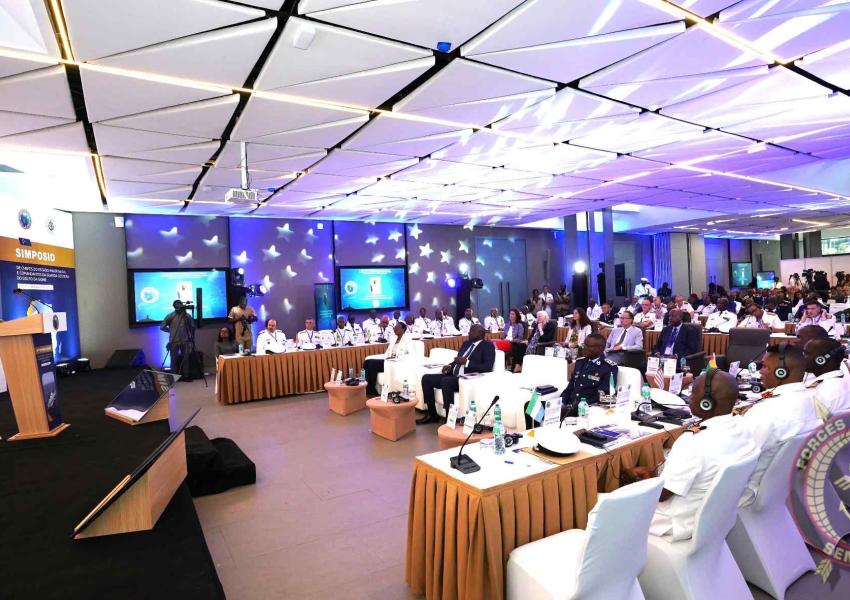
9th Symposium of Naval and Coast Guard Chiefs of the Gulf of Guinea: A Strategic Turning Point for Maritime Security in the Gulf of Guinea
The 9th Symposium of Chiefs of Naval Staff and Coast Guard Commanders of the Gulf of Guinea concluded successfully in Dakar, Senegal, from 17 to 20 November 2025, marking a significant strategic milestone for maritime security cooperation in West and Central Africa. Hosted by the Senegalese Navy and co-chaired by the Senegalese Armed Forces and the ECOWAS Commission, the high-level gathering brought together more than 200 delegates, representing 27 national navies, 11–12 international organizations, and 16 maritime institutions and industries.
The opening ceremony, held on 18 November 2025 at the Noom Hotel (formerly Radisson), took place under the chairmanship of Air General (Ret.) Birame DIOP, Minister of the Armed Forces of Senegal. In his keynote address, Minister Diop underlined the urgency of strengthening cooperation between the nations of the Gulf of Guinea and the wider Atlantic space, stressing the need to align maritime security strategies, promote a global strategic dialogue, and enhance interoperability among navies and coast guards.
Held under the theme “Developing Synergies between the Gulf of Guinea and the Atlantic Space”, the symposium reflected a clear evolution in regional and international strategic thinking.
Participants emphasized that the protection of the Gulf of Guinea—one of the world’s most vital maritime corridors for global trade, energy flows, and regional economic stability—can no longer rely on fragmented national or sub-regional responses. Instead, discussions converged on the necessity of adopting a “Global Atlantic” approach, integrating African, European, American, and international partners to address increasingly complex and interconnected maritime threats.
Among the key concerns raised was the expansion of armed terrorist groups toward coastal zones, introducing a new and destabilizing dimension to maritime insecurity. While piracy, illegal fishing, trafficking, and organized crime remain persistent challenges, the potential convergence of terrorism with maritime criminal networks was identified as a critical emerging risk. Addressing this threat will require enhanced intelligence sharing, maritime surveillance, and coordinated operational responses across national and regional command structures.
At the same time, participants acknowledged the tangible operational progress achieved under the Yaoundé Code of Conduct, which continues to form the backbone of maritime security cooperation in the region. Improved information exchange, joint patrols, and coordinated responses have contributed to a measurable reduction in piracy incidents in recent years, highlighting the effectiveness of structured regional frameworks when supported by sustained political and operational commitment.
Looking ahead, the Chiefs of Naval Staff and Coast Guard Commanders adopted decisive resolutions aimed at reinforcing and institutionalizing the regional maritime security architecture. These include the formal institutionalization of the Symposium as a deliberative body within the Yaoundé Architecture, the recommendation to establish a regional maritime information fusion center, and a call for a Conference of Heads of State to ensure high-level political backing and resource mobilization.
 Greek
Greek  English