


Cyprus Sets Its Defence Agenda at the Heart of Europe
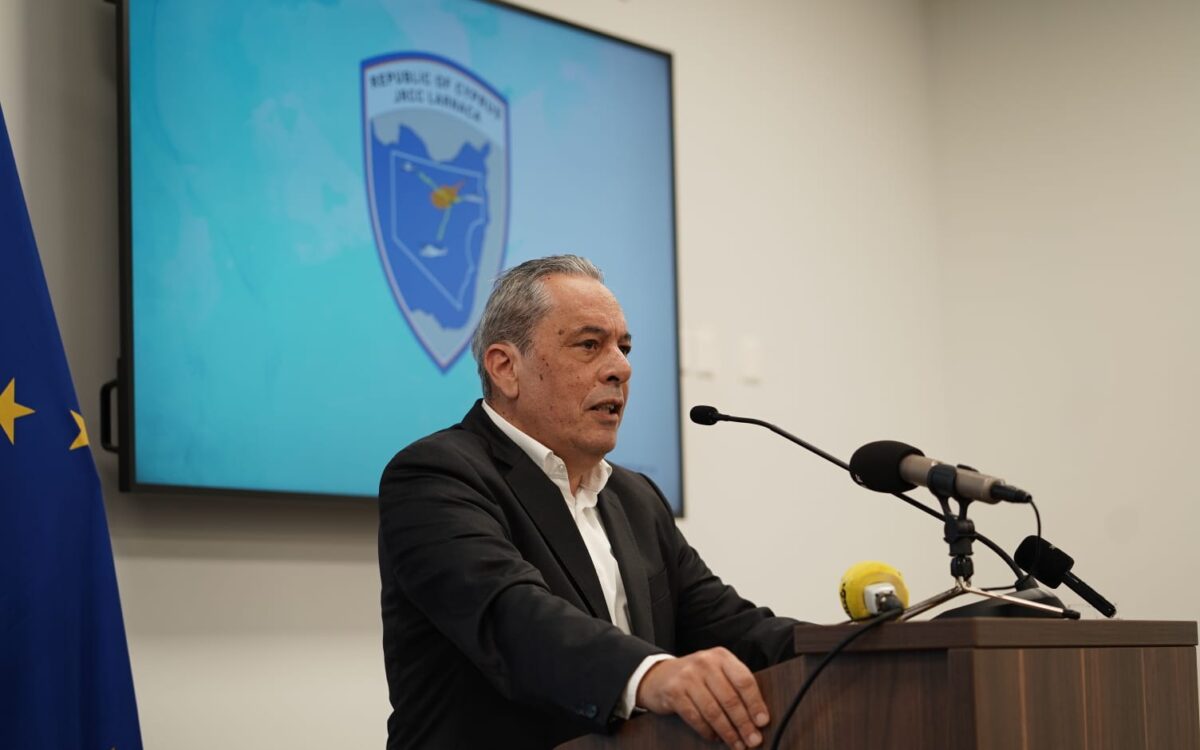
At the Search and Rescue Coordination Centre in Larnaca, Cyprus’s Minister of Defence, Vasilis Palmas, outlined the strategic priorities of the Republic of Cyprus as it assumes the Presidency of the Council of the European Union at a time of profound geopolitical turbulence. Addressing accredited correspondents from European and international media, Palmas framed security and defence not as peripheral policy areas, but as core pillars of European cohesion and credibility.
Cyprus, he noted, is taking on the Presidency amid sweeping global realignments and multi-layered threats. In this environment, Europe’s ability to act decisively in security and defence will define its relevance as a geopolitical actor. For Cyprus, this responsibility is inseparable from its own strategic geography: positioned at the easternmost edge of the EU, at the crossroads of Europe, the Middle East and Africa, the island plays a unique role in maritime security, crisis management and military mobility.
A central element of this role is the modernisation of Cyprus’s defence infrastructure. The Naval Base at Mari, Palmas explained, is undergoing a comprehensive upgrade as part of a long-term plan to enhance the operational capacity of the National Guard, strengthen maritime security, and improve Cyprus’s ability to support EU and allied forces. The parallel development of the Port of Limassol–Naval Base Mari is of strategic importance, significantly expanding berthing capacity and logistical support for European and allied deployments.
These investments, Palmas stressed, are not purely national. They serve the collective security of the European Union in the Eastern Mediterranean. The infrastructures being developed will support not only military requirements, but also humanitarian missions, civil protection operations and crisis-response efforts—fully aligned with European and international commitments.
Cyprus’s location, at the intersection of major sea lanes, energy corridors and commercial networks, gives particular weight to these efforts. Freedom of navigation, the security of maritime transport and the protection of critical infrastructure are foundational principles of international law and of Europe’s maritime strategy. Strengthening naval infrastructure, Palmas argued, is therefore an investment in stability and international legality.
The Minister highlighted Cyprus’s proven role in crisis response, recalling how the country’s ports, airports and facilities have repeatedly supported humanitarian operations and evacuations from conflict zones. These contributions have enhanced the EU’s capacity to manage crises and project stability in its southern neighbourhood. Securing adequate European funding for infrastructure upgrades, he emphasised, is essential if Cyprus is to deepen this contribution within the framework of military mobility and crisis management.
Military mobility stands at the core of the Cypriot Presidency’s defence agenda. In a rapidly evolving security environment, Palmas described it as a key enabler of European defence readiness and collective resilience. Ensuring the rapid, coordinated and reliable movement of personnel, equipment and assets across the European transport network is critical for effective response to complex threats. Cyprus aims to maintain political momentum, strengthen convergence among Member States and ensure continuity in this strategic file—provided that the necessary European funding is secured.
Beyond infrastructure and logistics, Palmas framed Europe’s challenge in broader strategic terms. The Union, he argued, must strengthen its strategic autonomy in security and defence while remaining anchored in multilateralism and international law. A more autonomous Europe is one better equipped for prevention, deterrence and effective crisis management.
Maritime security will be a particular focus of the Cypriot Presidency. Palmas committed Cyprus to advancing European cooperation in this domain, protecting critical maritime infrastructure and implementing the European Maritime Security Strategy in close coordination with Member States, EU institutions and international partners.
Throughout his address, the Minister underscored that Cyprus approaches defence through cooperation and prevention. Its partnerships, whether with EU Member States or with regional and international actors, are based on transparency, mutual respect and international law. They are not directed against third parties, but aimed at fostering stability in a region of exceptional strategic importance.
Closing his remarks, Palmas linked defence and security to the everyday realities of citizens. These are not abstract concepts, he said, but foundations of peace, stability and prosperity. As Cyprus assumes the EU Presidency, it does so with a clear ambition: to contribute responsibly and decisively to shaping a Europe that is more secure, more resilient and more united.
 English
  Greek
Greek