


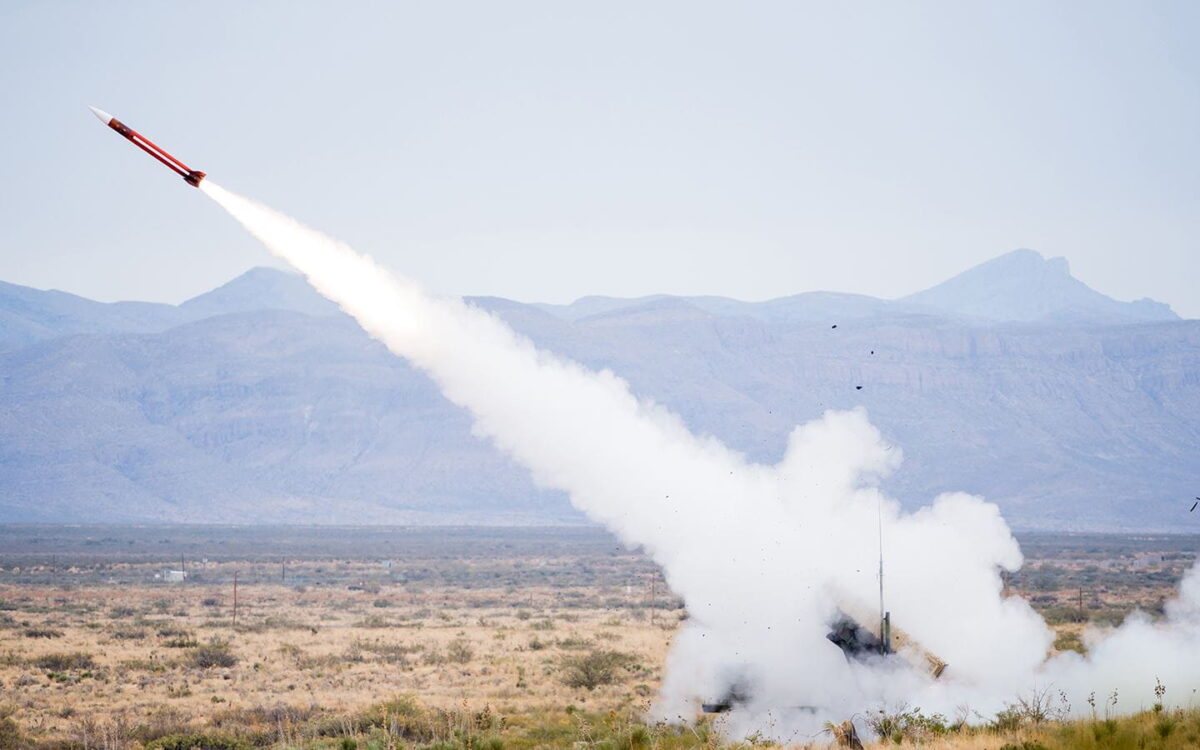
Türkiye Reopens Long-Range Air Defence Options as Patriot and SAMP/T Return to the Agenda
Türkiye is once again examining the acquisition of Western long-range air and missile defence systems, with Defence Minister Yaşar Güler confirming that Ankara is evaluating both the U.S.-built Patriot and the European SAMP/T systems as part of its efforts to strengthen the country’s integrated air defence architecture.
The minister’s remarks come at a time of heightened regional tensions and ahead of the NATO Summit in Ankara, where missile defence, burden-sharing and the strengthening of NATO’s collective deterrence are expected to dominate discussions. Güler stated that Türkiye is assessing all available options to enhance its air and missile defence capabilities while continuing to modernise its armed forces and fulfil NATO capability targets by 2029.
The renewed interest in Patriot and SAMP/T marks a significant development in Türkiye’s defence procurement policy. For more than a decade, Ankara has sought to acquire a long-range air defence system capable of defending against ballistic missiles, cruise missiles and advanced air threats. However, previous procurement efforts became entangled in political disagreements, industrial participation issues and wider geopolitical developments.
One of the most notable setbacks occurred during negotiations with the United States for the acquisition of the Patriot system. Although Raytheon offered the Patriot as Türkiye’s future long-range air defence solution, the negotiations ultimately failed after Ankara sought extensive technology transfer, local industrial participation and co-production rights. Turkish authorities argued that acquiring such a strategic capability without access to technology and domestic production would not support the country’s long-term objective of developing an independent defence industrial base. As a result, the negotiations were eventually abandoned.
Attention then shifted towards the European SAMP/T system, developed by the Franco-Italian Eurosam consortium. In 2017, Türkiye, France and Italy launched a trilateral cooperation programme to jointly develop and eventually co-produce an air and missile defence system based on the SAMP/T architecture. By 2019, the three countries were reportedly close to signing a comprehensive industrial cooperation agreement that would have included significant Turkish industrial participation and technology cooperation. However, the project was effectively frozen following Türkiye’s military operation in northern Syria, which triggered political tensions with several European partners and halted defence cooperation initiatives.
Following the collapse of both procurement efforts, Türkiye proceeded with the acquisition of the Russian S-400 Triumf air defence system. The decision fundamentally altered Ankara’s defence relationship with the United States and NATO. Washington responded by removing Türkiye from the F-35 Lightning II Joint Strike Fighter programme and imposing sanctions under the Countering America’s Adversaries Through Sanctions Act (CAATSA). Since then, the S-400 has remained one of the principal obstacles in Turkish-U.S. defence relations.
Today, however, the strategic environment has changed considerably. The increasing use of ballistic missiles, long-range strike weapons and unmanned systems in conflicts across the Middle East and Eastern Europe has reinforced the importance of integrated, NATO-compatible air defence networks. At the same time, Türkiye has continued investing heavily in indigenous programmes, including the HİSAR family of air defence systems and the long-range SİPER programme, which are expected to form the backbone of the country’s future layered air defence architecture.
Against this backdrop, Defence Minister Güler’s confirmation that both Patriot and SAMP/T are under evaluation suggests that Ankara is seeking to complement its indigenous capabilities with proven NATO-interoperable systems while simultaneously restoring defence cooperation with Western partners.
Several defence analysts believe that the simultaneous consideration of both systems should not necessarily be viewed as competing alternatives. Instead, Türkiye could ultimately decide to procure both systems to establish a multi-layered air defence network, while preserving strategic flexibility and strengthening defence cooperation with both the United States and key European allies.
Another issue likely to influence any future procurement is the status of the Russian S-400 system. Although no official decision has been announced, speculation continues regarding possible arrangements that could remove the S-400 from active service or otherwise resolve the issue with Washington. Any solution acceptable to both sides would significantly improve the prospects for closer defence-industrial cooperation between Türkiye and the United States and could potentially reopen discussions regarding Türkiye’s future participation in the F-35 programme.
While such a scenario remains uncertain and would require major political decisions by both Ankara and Washington, the Defence Minister’s latest remarks indicate that Türkiye is once again positioning itself to deepen defence cooperation within NATO while maintaining its long-term objective of developing a modern, layered and nationally supported air and missile defence capability.
Source: DBDC GROUP – Analysis
 English
  Greek
Greek