


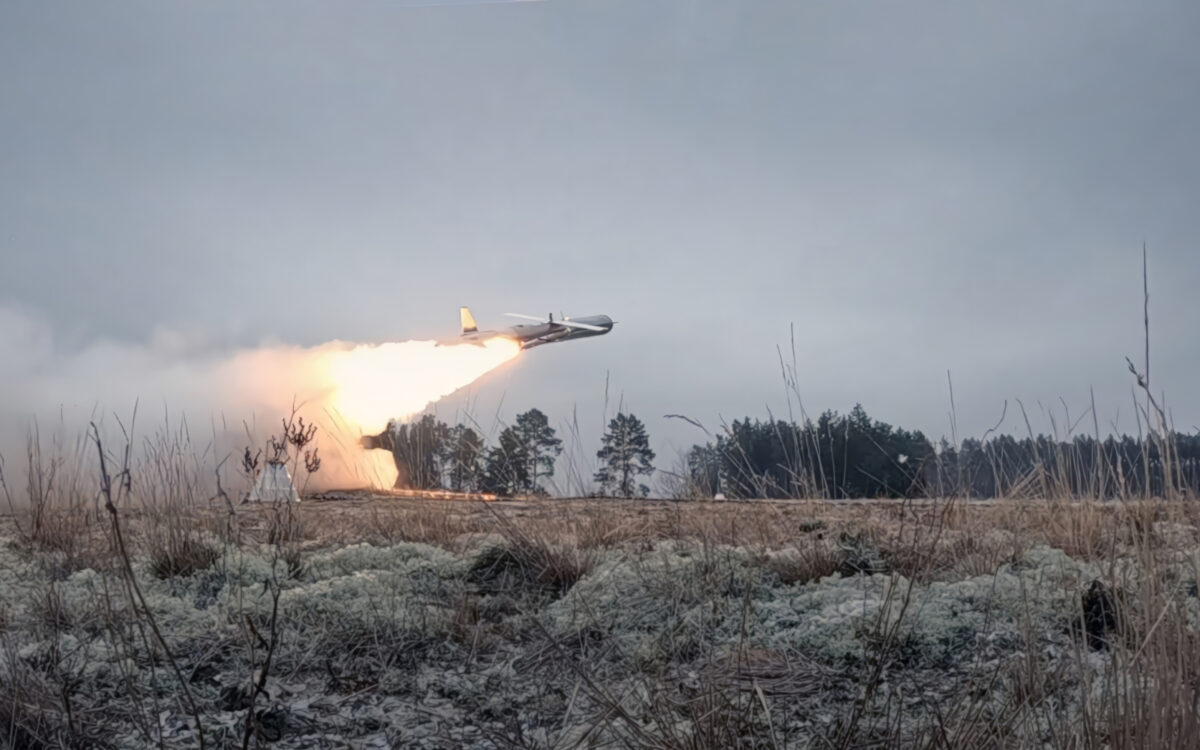
DESTINUS Presents Advanced Missile Systems, UAVs and Autonomous Technologies to Hellenic Army General Staff
European aerospace and defence company DESTINUS presented its advanced missile systems, unmanned aerial vehicles (UAVs), propulsion technologies and autonomous navigation solutions to officers of the Hellenic Army General Staff (HAGS) during a meeting held on 15 October 2026. According to an official announcement issued by the Hellenic Ministry of National Defence on 3 November, the presentation covered the company’s growing portfolio of missile development technologies, jet-powered and internal combustion engine UAVs, propulsion systems and command-support solutions. The briefing provided an opportunity for Greek military officials to become acquainted with technologies developed by DESTINUS, reflecting the increasing importance of autonomous systems, long-range precision strike capabilities and integrated unmanned platforms in modern military operations.
Established in 2021, DESTINUS has developed into a European defence technology company specialising in autonomous aerial platforms, cruise missiles, propulsion systems and guidance technologies. Its portfolio includes the RUTA family of cruise missiles, designed to provide scalable precision-strike capabilities. The RUTA Block 1 incorporates the company’s internally developed T150 turbojet engine, while the more advanced RUTA Block 2 introduces additional capabilities intended for modern long-range strike operations. The RUTA Block 3 programme, currently under development, is designed around a larger T220 turbojet engine, advanced navigation capabilities and a modular launch architecture supporting deployment from land-based, maritime and fixed installations. These developments demonstrate the company’s emphasis on integrating propulsion, guidance, airframe engineering and manufacturing within a unified industrial structure. Destinus develops all the critical technologies in-house, including propulsion technologies as well as compact turbojet engines for unmanned platforms and missile applications. Its T150 engine, capable of generating approximately 150 kilogram-force of thrust, represents a significant component of its vertically integrated approach to aerospace manufacturing.
Another important area of DESTINUS’s activities concerns unmanned aerial systems and counter-UAV technologies. The company’s Hornet interceptor family is designed to address emerging aerial threats, including hostile drones and other low-cost airborne systems. The Hornet Block 1 and Block 2 configurations incorporate autonomous engagement capabilities supported by electro-optical, infrared and radar-based guidance technologies, with an emphasis on operations in environments where satellite navigation signals may be disrupted or denied.
The company has also expanded its European industrial partnerships, notably through cooperation with German defence manufacturer Rheinmetall. In April 2026, the two companies announced plans to establish Rheinmetall Destinus Strike Systems, a joint venture intended to combine DESTINUS’s missile technology and platform-development expertise with Rheinmetall’s manufacturing capacity and industrial infrastructure. The initiative focuses on strengthening European production capabilities for modern missile systems and addressing growing demand for scalable, cost-effective defence technologies. Beyond strike systems, DESTINUS is also involved in the development of advanced interception technologies and integrated air-defence capabilities.
The presentation to the Hellenic Army General Staff comes amid Greece’s continuing efforts to modernise its Armed Forces and examine emerging technologies capable of strengthening operational effectiveness. Missile systems, autonomous UAVs, resilient navigation solutions and integrated command-support technologies are becoming increasingly relevant to contemporary defence planning, particularly in environments characterised by electronic warfare, sophisticated aerial threats and rapidly evolving battlefield requirements. Although the official announcement did not disclose any procurement decisions or specific agreements arising from the meeting, the presentation demonstrates the Hellenic Army’s interest in assessing technological developments across the European defence industry and exploring capabilities relevant to future operational requirements.
 Greek
 English