


Echodyne EchoShield Radar Selected for BAE Systems Anti Threat System
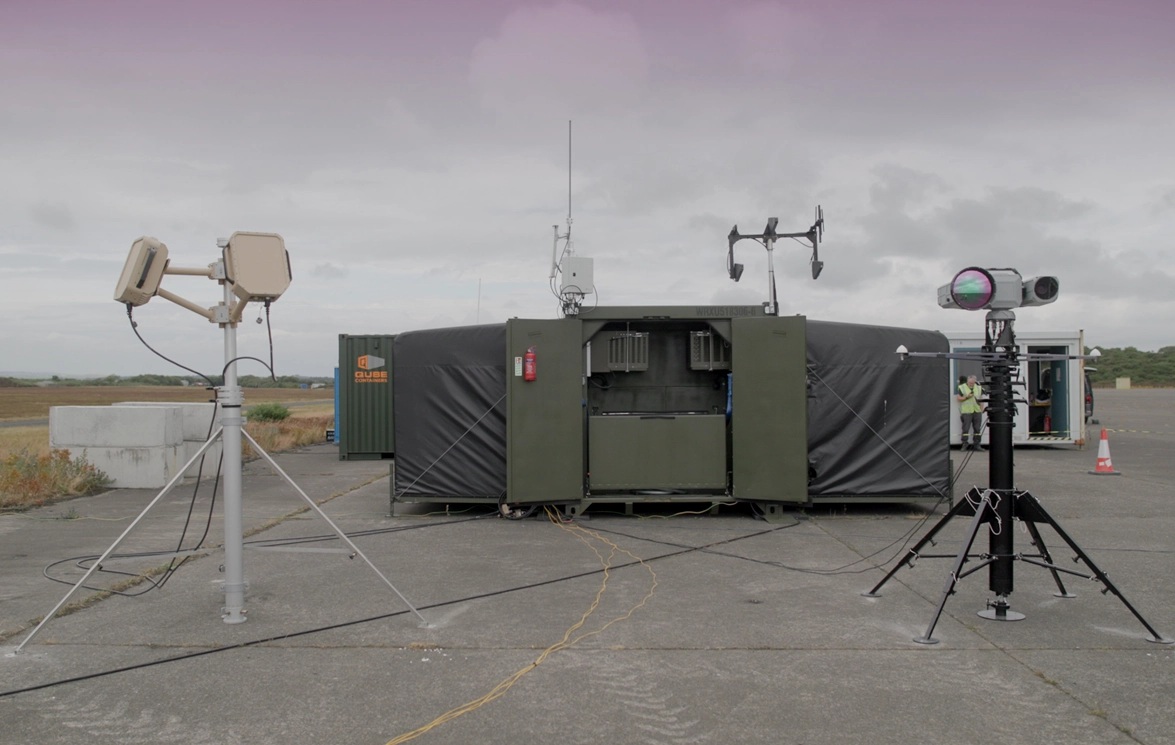
Echodyne has announced that its EchoShield radar has been selected and integrated into the BAE Systems Anti Threat System (BATS), strengthening the system’s ability to detect, classify, track and respond to uncrewed aerial threats. The integration follows recent live trials in Scotland, where BATS demonstrated the coordination of multiple sensors and effectors through a single command and control architecture. EchoShield is one of the sensors supporting this open, interoperable capability, supplying persistent airspace surveillance and precise tracking information to help operators assess emerging threats and coordinate appropriate responses across a range of operational environments.
Developed by BAE Systems, BATS is a modular, software defined counter-uncrewed systems capability designed to connect existing and future sensors and effectors through a secure and resilient data core. Its architecture combines sensing, intelligence, command and control, decision support and countermeasures, creating a common operating picture for operators. This integrated approach addresses the growing complexity of drone threats, which increasingly demand rapid coordination between detection, identification and response capabilities. By bringing these functions together, BATS aims to reduce the cognitive burden on personnel while maintaining human control over operational decisions and the selection of appropriate countermeasures.
Accurate radar data is central to this process. Counter-UAS systems must detect potential threats at useful ranges, maintain stable tracks during complex manoeuvres and provide sufficiently precise information to support optical sensors, command systems and effectors. Echodyne’s proprietary metamaterials electronically scanned array (MESA) technology delivers these capabilities in a compact format designed for commercial scalability. EchoShield contributes persistent tracks, threat classification and precise location data, supporting sensor fusion and timely decision making. Its low size, weight and power requirements also offer flexibility for fixed installations, rapidly deployable configurations and mobile platforms, supporting different protection requirements within a common system architecture.
Louise Heywood, Head of Strategy at BAE Systems Digital Intelligence & Land, highlighted the challenges posed by increasingly capable and accessible drones. She explained that BATS uses trusted sensor information to help operators identify, confirm and target threats through a single integrated system. EchoShield’s contribution provides a detailed airspace picture that supports the system’s decision logic and the selection of suitable effectors. Echodyne Chief Executive Officer Eben Frankenberg similarly emphasised the relationship between sensor quality and operational effectiveness, describing precise, stable and persistent radar tracks as essential to enabling rapid and confident responses as drone threats continue to evolve.
The open architecture of BATS allows integration with additional sensors, effectors, air defence systems and command platforms as operational requirements develop. The capability is intended to scale from point defence to wider area protection, supporting fixed, semi-mobile and mobile missions for military, government and critical infrastructure users. Echodyne reports that its radars are integrated into hundreds of counter-UAS systems worldwide, with many available through the Joint Interagency Task Force 401 C-UAS Marketplace. The company has also opened an advanced manufacturing facility in Washington State, with capacity expected eventually to exceed 30,000 radars annually, supporting growing international demand for scalable counter-drone surveillance capabilities and a more readily available radar supply.
 Greek
 English