


Europe Tests Defence Innovation Against Operational Demands
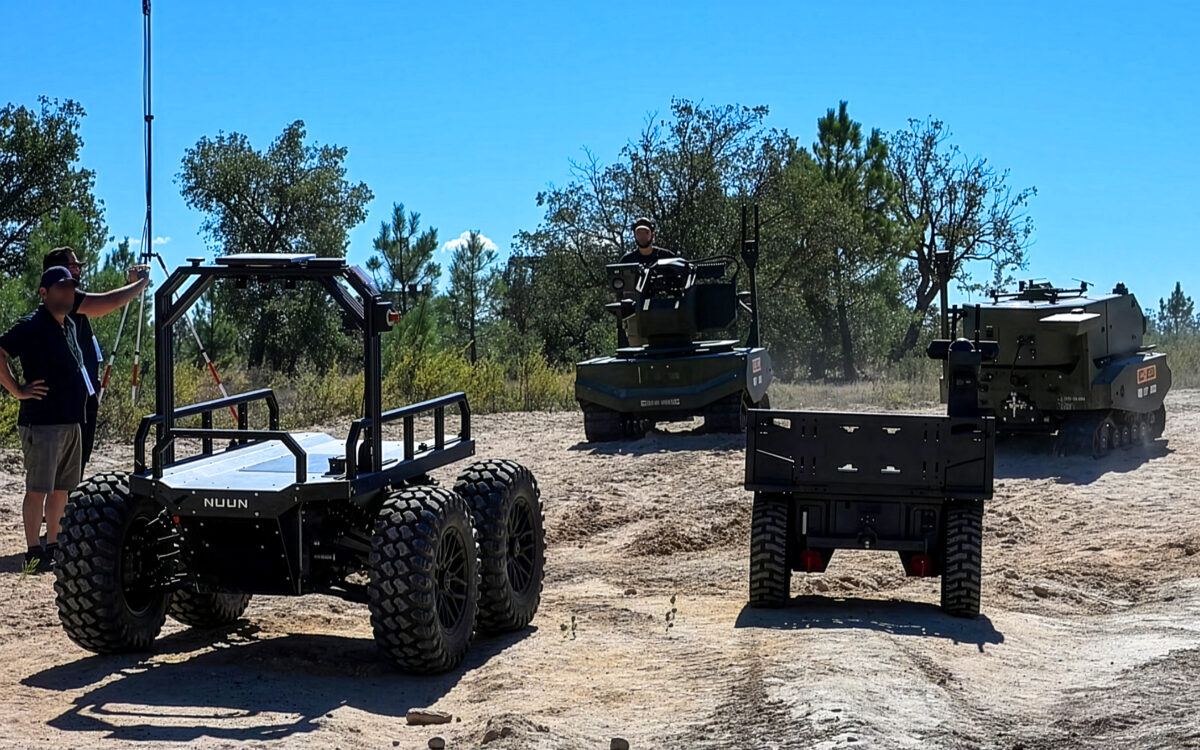
Europe’s effort to bring emerging defence technologies into military service took a practical step forward in Portugal, where the European Defence Agency’s EU OPEX campaign placed new systems in realistic operational scenarios. Conducted with the Portuguese Armed Forces at Santa Margarida military camp from 21 September to 14 October 2026, the campaign brought developers into direct contact with military users. Its significance lies in the opportunity to examine how technologies perform beyond controlled demonstrations, where terrain, operational demands and integration with existing forces can expose limitations that are less apparent during development.
For the first time, EU OPEX was integrated into a national military exercise, ARTEX 26. This provided a more demanding setting for testing unmanned aerial and ground systems, counter-drone technologies and loitering munitions. Combining experimentation with an established exercise creates opportunities for soldiers to assess equipment against practical requirements and for companies to identify changes before progressing further towards deployment. However, participation in an exercise does not itself establish operational readiness. The longer-term value of the campaign will depend on whether the resulting feedback leads to improvements, further testing and procurement decisions that connect promising prototypes with military needs.
The campaign also illustrated the growing influence of Ukraine’s battlefield experience on European defence innovation. It hosted the second phase of BraveTech EU, an initiative funded by the European Commission and implemented with EDA and Ukraine’s Brave1 platform. Four of the six participating companies received €300,000 each, bringing the total awarded to €1.2 million. The selection followed an evaluation involving EDA, Commission and Brave1 specialists, alongside experts from EU Member States and the Portuguese Armed Forces. The funding is intended to support further technology development ahead of additional field experimentation in 2027, providing a defined next step rather than marking the completion of development.
The selected projects reflect several priorities shaping contemporary military requirements. Poland’s EdgeX Robotics is developing a robust, affordable unmanned ground vehicle, while Finland’s Kova Labs focuses on autonomous navigation through difficult terrain, including forests and environments filled with obstacles. France’s Soraccel is developing an artificial intelligence-driven mission system capable of navigating without GPS. Estonia’s Tempterno Defence is working on an affordable rocket system with a launcher that can be mounted on a vehicle or drone. Together, these projects highlight interest in affordable unmanned platforms, navigation resilience and adaptable systems. Their operational usefulness will ultimately depend on reliability, integration and suitability for the missions assigned to them.
EU OPEX sits within the wider Defence Readiness 2030 agenda, which includes accelerating the adoption of emerging technologies by European armed forces. EDA Chief Executive André Denk linked the campaign to Europe’s need for equipped forces, industrial capacity and faster technological adaptation, arguing that individual Member States cannot address the innovation challenge alone. The final demonstration attracted more than 400 guests, including Portugal’s president and senior defence leadership. Such visibility can help sustain institutional support, but the more consequential measure will be what follows: whether experimentation produces usable capabilities and whether European defence organisations can shorten the path from development to service.
 Greek
Greek  English