


Technological Milestone for Hellenic Aerospace Industry (HAI) as BARAK-MX and “Kentauros” Integration Is Successfully Demonstrated
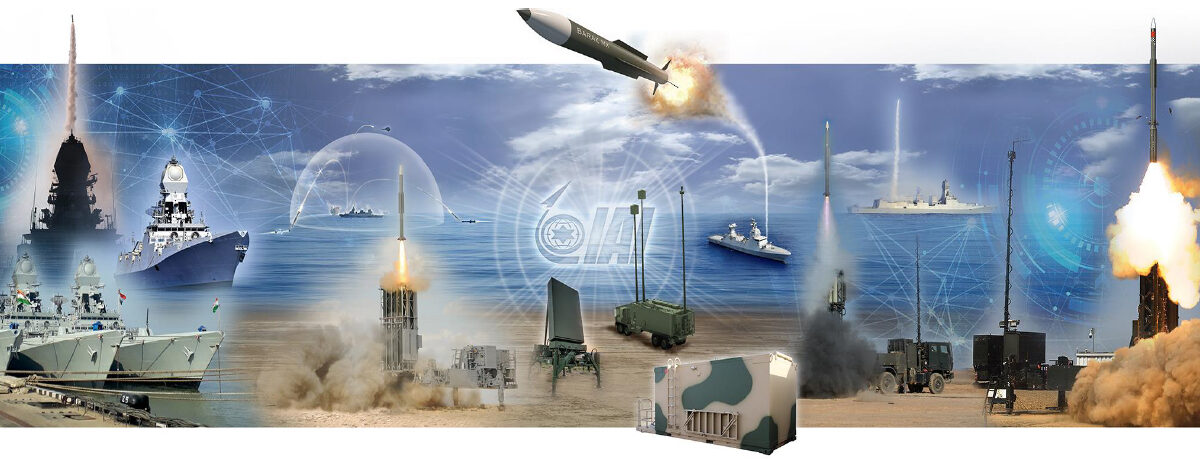
A significant technological milestone has been achieved by the Hellenic Aerospace Industry (HAI) following the successful field demonstration of the full integration of its “Kentauros” counter-UAV system with the BARAK-MX air and missile defence system developed by Israel Aerospace Industries (IAI).
The demonstration confirmed seamless interoperability between the two systems at the Command and Control (C2) level, marking a major step forward in the development of an integrated, multi-layered air defence architecture combining kinetic and non-kinetic effects.
Unified Hard-Kill and Soft-Kill Operations
The core operational advantage of the integration lies in the ability to combine hard-kill και soft-kill options within a single, centralised C2 environment.
The BARAK‑MX is a combat-proven air and missile defence system capable of countering a wide range of aerial threats, including combat aircraft, cruise missiles and ballistic missiles. By integrating Kentauros, developed by HAI, the system gains advanced soft-kill counter-UAS capabilities, based on electronic support measures and jamming techniques, enabling a non-kinetic response where operationally appropriate.
According to the results of the recent field demonstration, the two systems now operate as a fully unified solution—from threat detection and evaluation to target cueing and the activation of electronic countermeasures—allowing commanders to select the most effective response depending on the nature of the threat.
Alignment with the “Achilles’ Shield” Concept
The integrated BARAK-MX / Kentauros solution is fully aligned with the operational philosophy of the Achilles’ Shield programme, which aims to combine kinetic interception and electronic warfare under a common command-and-control framework.
This approach enables a scalable and cost-effective response to a broad spectrum of aerial threats, ranging from low-cost UAVs to complex, long-range missile systems. By reserving high-value interceptors for the most critical threats and employing electronic warfare against suitable targets, the system optimises resource allocation while enhancing overall defensive resilience.
Strategic and Industrial Significance
Following the demonstration, HAI Executive Chairman Alexandros Diakopoulos described the achievement as a major technological milestone for the company, highlighting that the successful integration confirms the ability of Greek-developed technologies to operate within advanced air defence architectures and to contribute meaningfully to modern, layered defence solutions.
From the Israeli side, Boaz Levy, President and CEO of IAI, emphasised the growing need for fully integrated, multi-layered air and missile defence systems in an era where aerial threats are rapidly evolving and becoming increasingly accessible. He underlined the importance of close cooperation with trusted partners and domestic defence industries to enhance operational resilience and meet expanding European defence requirements.
Proven Systems, Future-Ready Architecture
Both BARAK-MX and Kentauros are operationally proven systems with demonstrated effectiveness in demanding environments. Their integration represents more than a technical interface, reflecting a strategic industrial partnership that strengthens interoperability, technological sovereignty and defence autonomy.
By bridging missile defence and electronic warfare within a unified command framework, the combined BARAK-MX / Kentauros solution delivers a robust, multi-layered and economically sustainable air defence capability—positioning Greece to address the full spectrum of modern aerial threats while contributing to broader European air defence resilience.
 Greek
Greek  English