


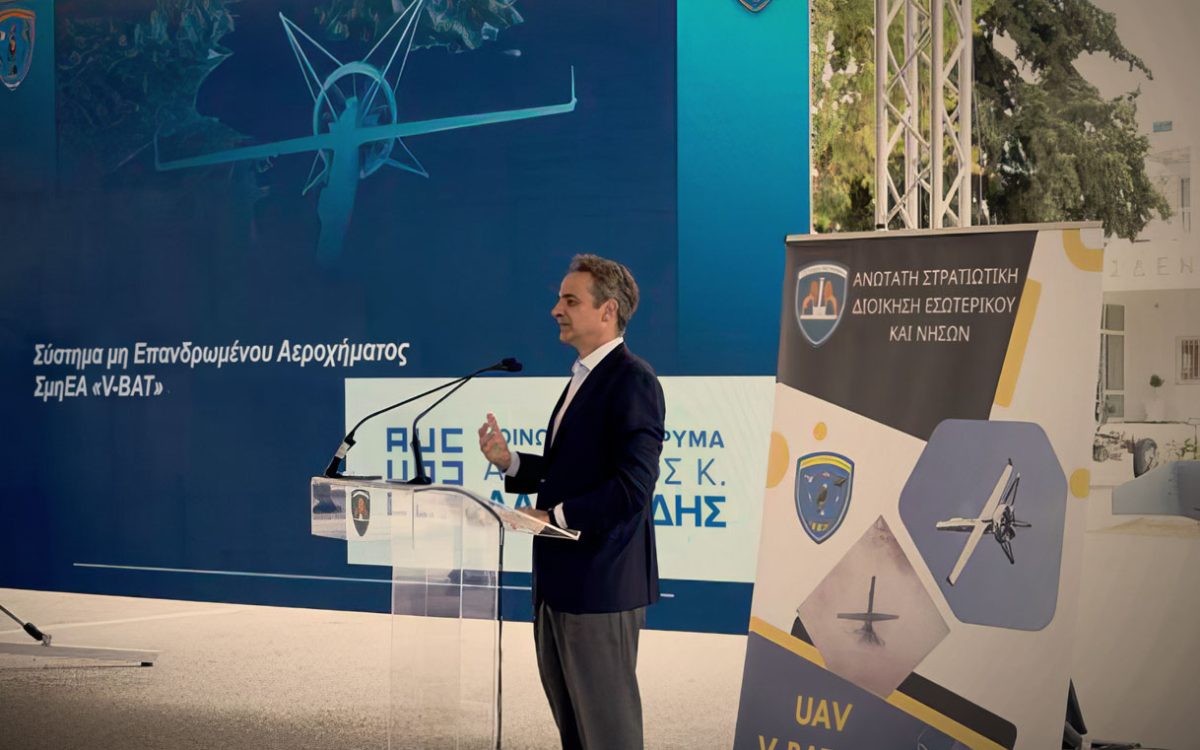
Prime Minister Kyriakos Mitsotakis’ Presence at the V-BAT Integration Ceremony into the Supreme Military Command of the Interior and Islands
GREEK DEFENCE NEWS
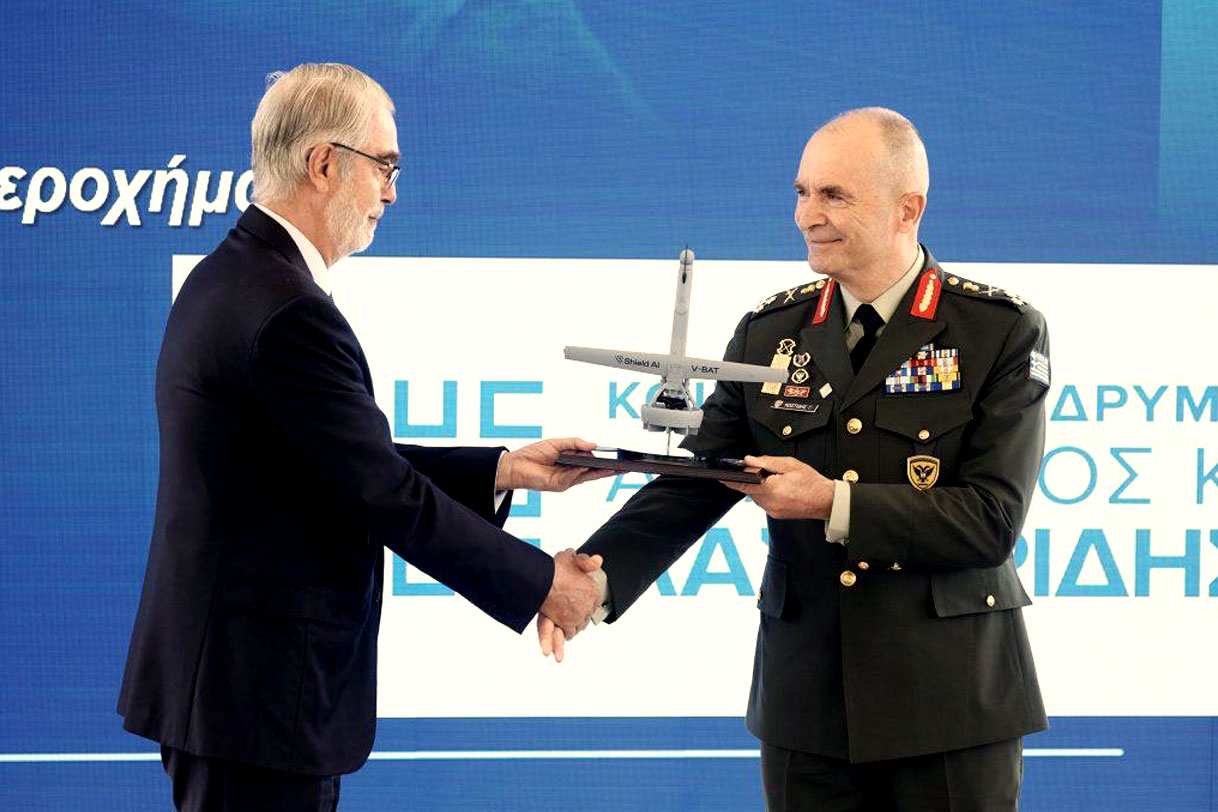
Prime Minister Kyriakos Mitsotakis attended the morning ceremony marking the integration of the advanced technology V-BAT unmanned aerial vehicles into the Supreme Military Command of the Interior and Islands (ΑΣΔΕΝ), a donation from the charitable foundation “Athanasios K. Laskaridis.” The new drones have significantly enhanced capabilities, characterized by a high degree of operational flexibility, extended autonomy, and multiple options for mobile handling. They are capable of operating under adverse weather conditions and in environments with jamming, all while maintaining low operational costs. Additionally, the V-BAT UAV is particularly easy to deploy and recover, improving the operational capacity and flexibility of its users in the field. After the presentation of the state-ofthe-art V-BAT drones, the Prime Minister delivered the following speech: “Mr. Minister, Mr. Chiefs, Mr. Thanasis and Mr. Pano Laskaridis, ladies and gentlemen, I am here today first and foremost to express my gratitude to Mr. Thanasis Laskaridis for yet another significant donation he has made to strengthen our Armed Forces. The system presented today, as you can see, has very important operational capabilities. Sometimes when you watch these videos, you might feel like it’s a scene from a science fiction movie. But in fact, this is the real picture of the operational theater today. A tremendous technological advancement has been made, especially in the areas of aerial surveillance and target identification—an advancement that clearly cannot leave the Greek Armed Forces indifferent. Both of these systems, which are being integrated into their capabilities today, significantly upgrade our capacities. They allow us to familiarize ourselves with the most advanced technology available. They enable us to test, quickly in the field, systems that we can later scale up. And exactly, Mr. Laskaridis, this is the advantage of these donations: that we can quickly acquire such systems, test them in the field, and then decide to what extent we want to further invest in them. Of course, I also want to make a special mention of Mr. Pano Laskaridis, who has consistently supported the Armed Forces, especially the Hellenic Navy.
“You might feel like it’s a scene from a science fiction movie. But in fact, this is the real picture of the operational theater today.”
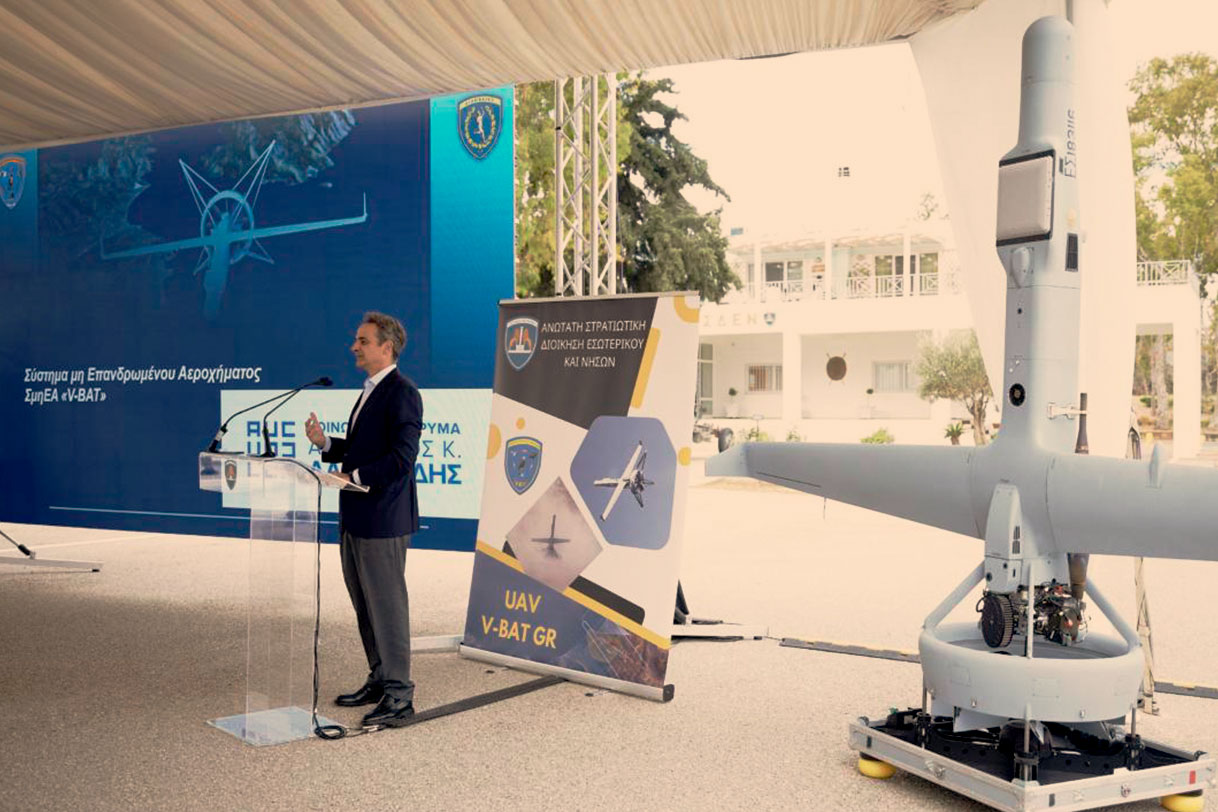
As the Minister mentioned, the Armed Forces are undergoing, I dare say, the most ambitious transformation ever undertaken since the establishment of the modern Greek state. To stay ahead of developments, we must implement this bold “Agenda 2030,” which involves not only acquiring modern weapon systems but also a different mindset—a different approach to how the Armed Forces operate in increasingly dynamic theaters of operations, how they become fully familiar with modern technology, and how we can practically upgrade our capabilities. And of course, as we have said many times with the Minister, what role could the Greek defense industry and domestic added value play in this grand effort? The work being done at ELKAK is truly outstanding and innovative, as it allows us to collaborate with a network of new, emerging defense startups, employing some of the best Greek minds. We have repeatedly said that it is inconceivable for a country that spends tens of billions of euros on armaments not to be able to develop its own domestic defense industry. And clearly, now that Europe is moving toward increased defense funding and significant intergovernmental cooperation, Greece having such a footprint in innovation in defense gives us a huge comparative advantage. Finally, allow me to close with a final note from Mr. Thanasis Laskaridis. The history of Greek benefactors is closely tied to supporting the Greek state and the Armed Forces. Perhaps the most iconic example is our battleship, the “Averof,” which, let’s not forget, was co-financed through a private donation, enabling us to acquire it at the very last moment when other powers were vying for it. I believe that the example set by the Laskaridis family should serve as a guide for how great Greek entrepreneurs, especially from the shipping sector, can support the Armed Forces with significant contributions. Because these donations have great flexibility and speed, and this, of course, holds immense value for the Armed Forces, which will always face gaps that need to be urgently filled. So, Mr. Laskaridis, I wish that this donation of yours—this donation, because it’s not the only one—especially the state-of-the-art electronic warfare building we will soon inaugurate, will serve as a guide for others to follow your example. Greece today needs great donors, and I am confident that they will rise to the occasion. Thank you very much.”
The Minister of National Defense, Nikos Dendias, noted among other things: “Our new research center, ELKAK, has already launched four innovative programs for unmanned systems development and will launch two more by the end of the year, incorporating them into a new doctrine and a comprehensive approach. Everything you see and will see are subsystems of this holistic approach called the ‘Achilles Shield.’ But it is with great joy that we in the Armed Forces see that in this immense reform effort—the Prime Minister has stated that it is the biggest reform ever undertaken in the Greek Armed Forces in the history of modern Greece— the Armed Forces are not alone. In conclusion, I would say that we are a small country, but that does not mean we must be a country that is not strong. There are historical examples of small but extraordinarily strong and successful nations. I believe that with the ongoing reform, we are on the right path.” Thanasis Laskaridis stated: “The recent war, which is still ongoing in Ukraine, has many lessons regarding the conduct of traditional-type conventional conflicts. I hope, I am confident, that our government, as well as the Armed Forces, are receiving messages of our times, evaluating them, and will act appropriately to protect our national interests and sovereignty. It is clear that the world is changing in how these crises are managed, and large concentrations, whether of people, tanks, or ships, which are visible from space, are no longer a way of managing military crises. I hope that my small donation will inspire other colleagues to get involved and help.”
 Greek
Greek  English