


Greece Hosts 19th Conference of Chiefs of Defence of the Balkan Countries in Thessaloniki
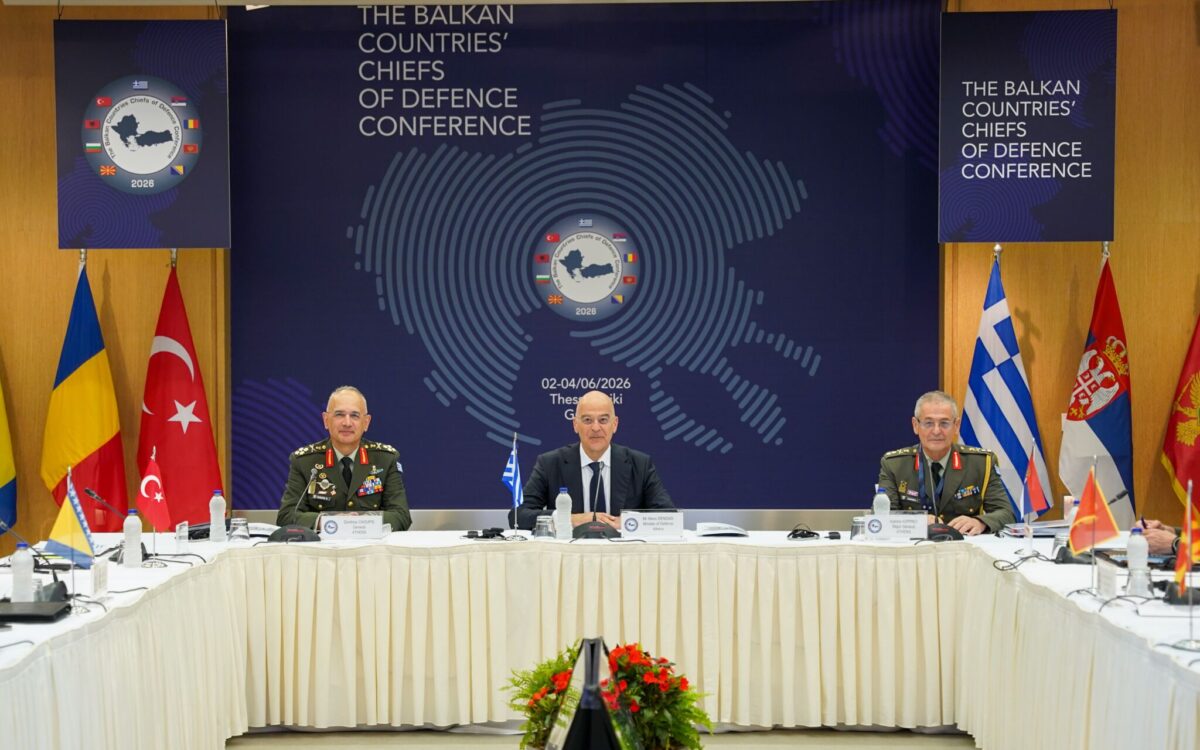
Greece successfully hosted the 19th Conference of Chiefs of Defence (CHODs) of the Balkan Countries in Thessaloniki from 2 to 4 June 2026, bringing together the senior military leadership of Southeast Europe to discuss regional security, defence cooperation, and emerging operational challenges.
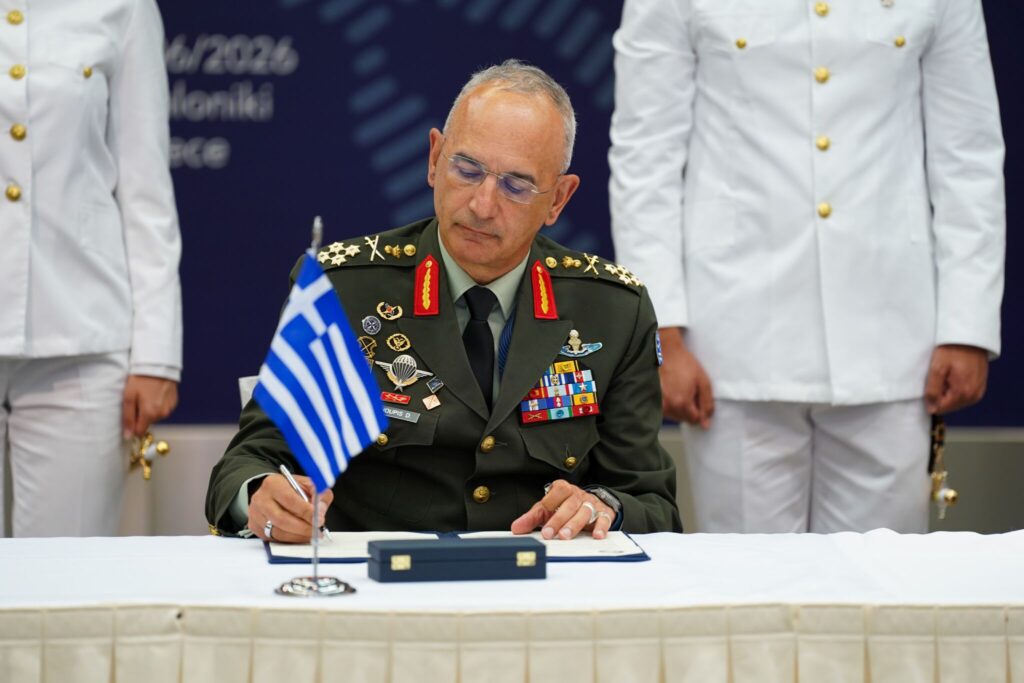
The conference was held under the patronage of the Greek Minister of National Defence, Nikos Dendias, and was officially opened by the Chief of the Hellenic National Defence General Staff (HNDGS), General Dimitrios Choupis, who welcomed the participating delegations and emphasized the importance of strengthening regional military cooperation amid an increasingly complex security environment.
The 2026 edition of the conference focused on the theme: “Challenges and Innovation in Civil Protection: Adapting to the New Realities of War.”
The discussions reflected the growing recognition that modern conflicts increasingly affect civilian populations and critical infrastructure, requiring closer military-civil cooperation, technological innovation, and improved regional coordination in disaster response, resilience, and crisis management.
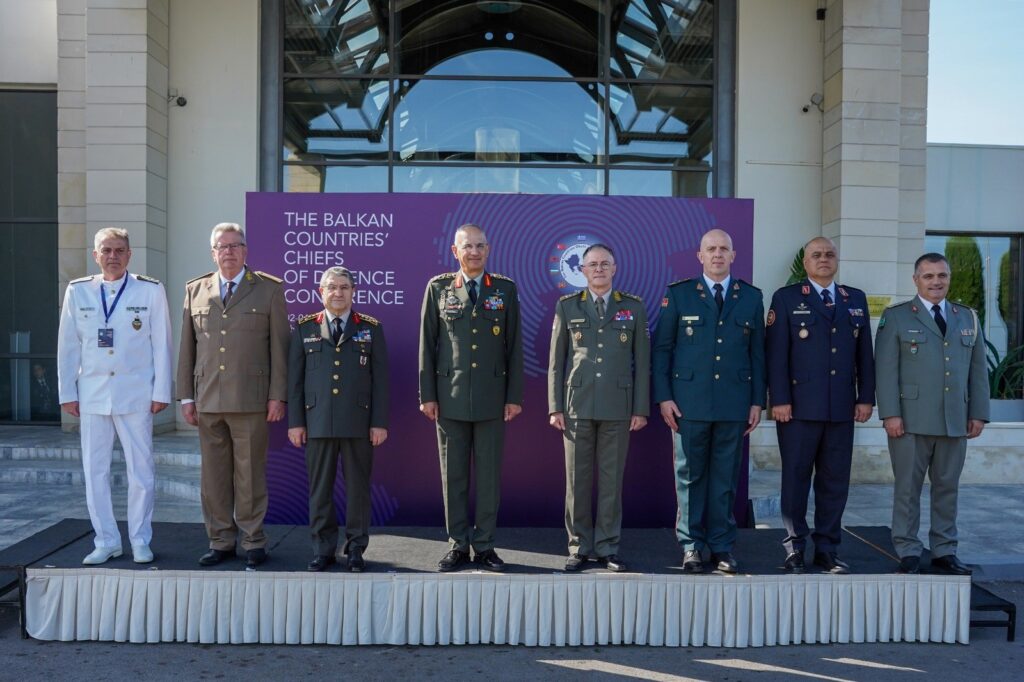
The conference gathered Chiefs of Defence from across the Balkans, including:
- Albania – Lieutenant General Arben Kingji
- Bosnia and Herzegovina – Lieutenant General Gojko Knežević
- Bulgaria – Admiral Emil Eftimov
- Republic of North Macedonia – Major General Sashko Lafchiski
- Montenegro – Brigadier General Miodrag Vuksanovic
- Serbia – General Milan Mojsilović
- Türkiye – General Selçuk Bayraktaroğlu
Romania participated through its Defence Attaché to Greece, Colonel Vasile Stănescu.
Observer delegations also attended from:
- Croatia – Major General Denis Tretinjak
- Slovenia – Brigadier General Boštjan Bas
Reflecting the conference’s growing strategic significance, several senior NATO and European Union officials also participated, including:
- Admiral George M. Wikoff, Commander of NATO Allied Joint Force Command Naples (JFC Naples)
- Rear Admiral Vasileios Gryparis HN, Operational Commander of the European Union’s EUNAVFOR ASPIDES maritime security operation
- Dr. Nikos Loutas, Director of NATO Headquarters’ Innovation, Hybrid and Cyber Division
Their participation highlighted the increasing importance of multinational cooperation in addressing hybrid threats, cyber security, maritime security, and emerging technologies affecting regional defence.
Throughout the conference, military leaders exchanged views on the changing strategic landscape in the Balkans and the wider region. Discussions focused on strengthening defence cooperation, improving interoperability among regional armed forces, and adapting military capabilities to respond to evolving operational challenges.
Special attention was devoted to innovation in civil protection, reflecting lessons learned from recent conflicts where attacks on civilian infrastructure, cyber operations, hybrid warfare, and natural disasters have underscored the need for integrated military and civilian response mechanisms.
Participants also examined opportunities to expand practical cooperation through joint exercises, information sharing, crisis response planning, and regional confidence-building initiatives.
On the margins of the conference, General Dimitrios Choupis held a series of bilateral meetings with the Chiefs of Defence of Albania, Bosnia and Herzegovina, Bulgaria, Serbia, and Türkiye, as well as with Admiral George M. Wikoff of JFC Naples.
These meetings focused on strengthening bilateral military relations, enhancing operational cooperation, and discussing regional security developments.
The Conference of Chiefs of Defence of the Balkan Countries remains a longstanding Greek initiative that was first launched in Thessaloniki in 2007. Since then, it has become an important annual forum promoting dialogue, mutual understanding, and military cooperation among Balkan nations.
At a time of heightened geopolitical uncertainty and rapidly evolving security challenges, the conference continues to serve as a valuable platform for fostering stability, improving regional interoperability, and reinforcing collective approaches to defence and crisis management throughout Southeast Europe
 English
  Greek
Greek