


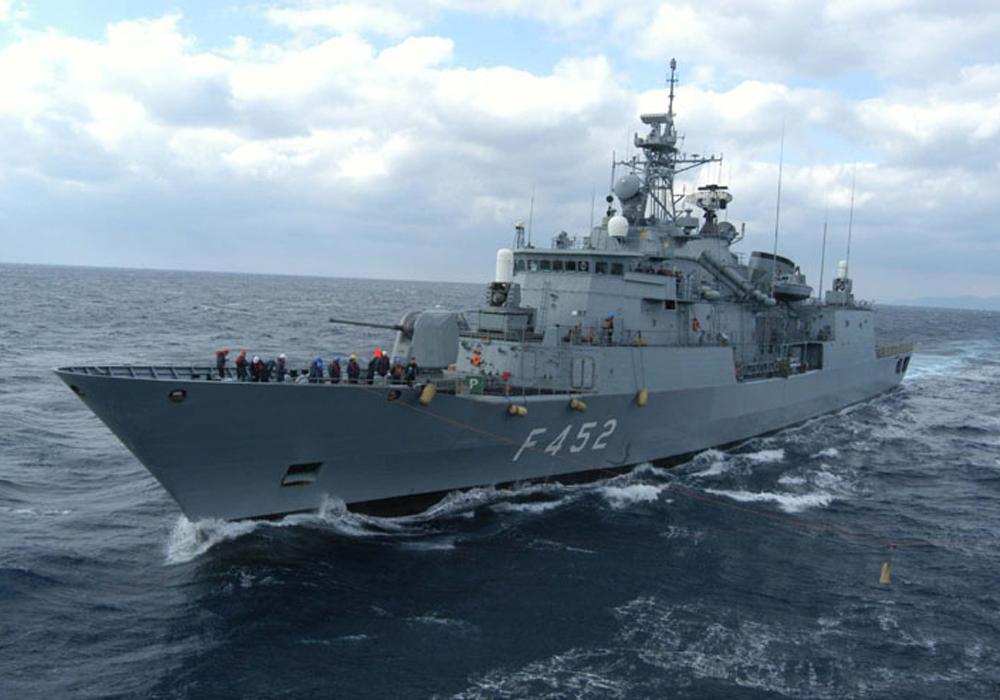
MEKO Frigates: Electronics and Sensors as the First Step in their Upgrade
The modernization of the Hellenic Navy’s four Hydra-class MEKO frigates is finally gaining momentum, with the electronic systems and sensors prioritized as the first phase of the upgrade. Despite bureaucratic delays, final approval from Greece’s Government Council for Foreign Affairs and Defence (KYSEA) is expected soon. Once approved, the project will proceed through the General Directorate for Defence Investments and Armaments (GDDIA) and the Hellenic Court of Audit, with contracts anticipated to be signed within 2025.
The modernization program will proceed in phases. A clear decision has been made to separate the upgrade of electronic systems from mechanical work. While electronics are deemed an immediate priority, mechanical upgrades will follow at a later stage, depending on the fleet’s operational needs.
The first step of the program focuses on overhauling the frigates’ sensors and electronic systems, which are critical for ensuring the ships’ continued relevance in a modern multi-threat environment. These upgrades will significantly enhance the operational capabilities of the MEKO frigates.
Thales will carry out the modernization of the electronic systems through a certified Greek company. The work is expected to take place either at the Salamis Naval Base or one of the available Greek shipyards. The final decision on the location will be based on cost-effectiveness, available facilities, and timeline requirements.
One of the most significant additions is the NS-110 4D AESA radar from Thales. This advanced radar has a reported air target detection range of up to 280 kilometers, capable of identifying threats from fighter jets, UAVs, and even high-speed missiles. It is an enhanced version of the earlier NS-100 and can also detect surface targets up to 80 kilometers away. The radar can track and process up to 1,000 targets simultaneously—an enormous leap from the current MEKO radar, which has limited air and sea detection ranges of just 80 and 40 kilometers respectively.
In addition to the NS-110, the outdated STIR fire control radars will be replaced with modern systems capable of tracking high-speed targets and guiding interceptor missiles accurately.
Complementing the new radar is the TACTICOS II Combat Management System (CMS), also from Thales. This upgraded CMS is already in service aboard the Hellenic Navy’s Super Vita fast attack craft and is known for its multi-function displays, rapid sensor data processing, and automatic threat prioritization. It directs weapons systems with precision and speed, significantly boosting the MEKO’s combat effectiveness.
The upgraded frigates will be armed with ESSM Block II surface-to-air missiles, replacing the older Block I variants. The Block II missiles boast a range exceeding 50 kilometers, utilize multiple guidance modes, and can travel at speeds exceeding Mach 4. Their capabilities align perfectly with the increased performance of the new radar and CMS.
The TACTICOS II CMS will also integrate the KENTAVROS Electronic Warfare System, developed by Greece’s Hellenic Aerospace Industry (HAI). This system has already proven successful during Red Sea operations, where MEKO frigates used it to neutralize Houthi drones.
Other planned upgrades include a new electro-optical tracking system, improved communication systems, and the installation of a dual-layer close-in weapon system, potentially a combination of Phalanx and RAM. The frigates’ 5-inch Mk45 naval gun is also set for conversion from analog to digital configuration.
Most probably the electronics upgrade will transform how MEKO frigates operate, enabling them to effectively counter multiple threats, particularly aerial ones, in a saturated battlespace such as the confined Aegean Sea. The modernization is seen as a strategic necessity to ensure Greece maintains capable and competitive naval forces in the region.
© Hellenic Navy – HS HYDRA
 English
  Greek
Greek